Exciting discovery down the Old Harbour!

With the bulk of the serious stone work completed on the Red Lion Slip and the Old Quay’s parapet the civil engineers have moved on to the Old Harbour access road. The early days of the restoration work saw volunteers in action removing years of weed and debris from the area.

aceess road
weeds

These photos show the restoration work back in January 2025 when volunteers helped clear away decades of weed growth, buddleia and accumulated soil.

Ivy and other plants were undermining the integrity of the stone work – they were also helping to hide from view some key information about the construction history of the harbour – but more of that later!

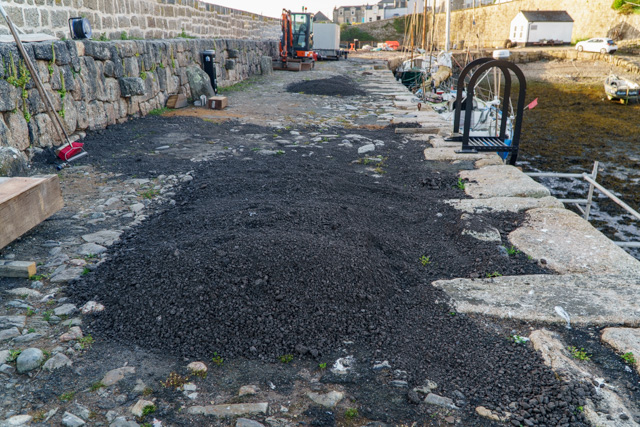
This was the surface of the access road at the time of commencement – a patchwork of tarmac and concrete repairs and wear and tear representing decades of ongoing maintenance to keep the Old Quay accessible.

The lower section of the access road had been repaired several times with tarmac to stabilise the surface.  Underneath, there appeared to be a more substantial layer of well-worn stones.

These photos shows the surface of the access road at the top where it sweeps round the bend below the cottages. The deep central channel would indicate that in this area the surface was just infill rather than stone setts. There is a deep channel visible in both photos which would indicate that the access road surface was worn away through usage and the channeling of rain water running off Fore Street. The left hand image was taken before the cliff face below the Red Lion was reinforced with a granite retaining wall which is clearly visible in the right hand image.

Both images reveal just how worn the access road was around 100 years ago after years of fishermen’s boots, donkeys, horses and carts used it to access the Old Quay.

Historic England provided guidance on the next stage of the project and it was decided to remove the layers of concrete and tarmac before taking a decision on how best to make good the surface to maintain safe access in the future.

Top right and right: The old tarmac was broken up and removed

tarmac removal

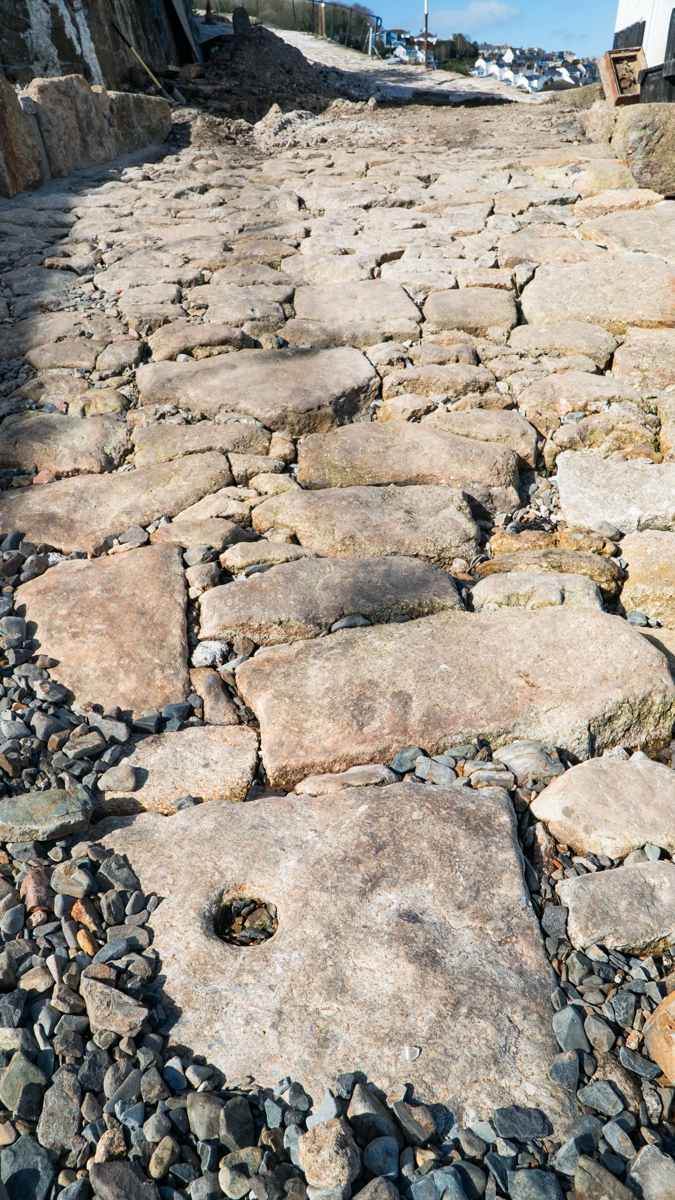
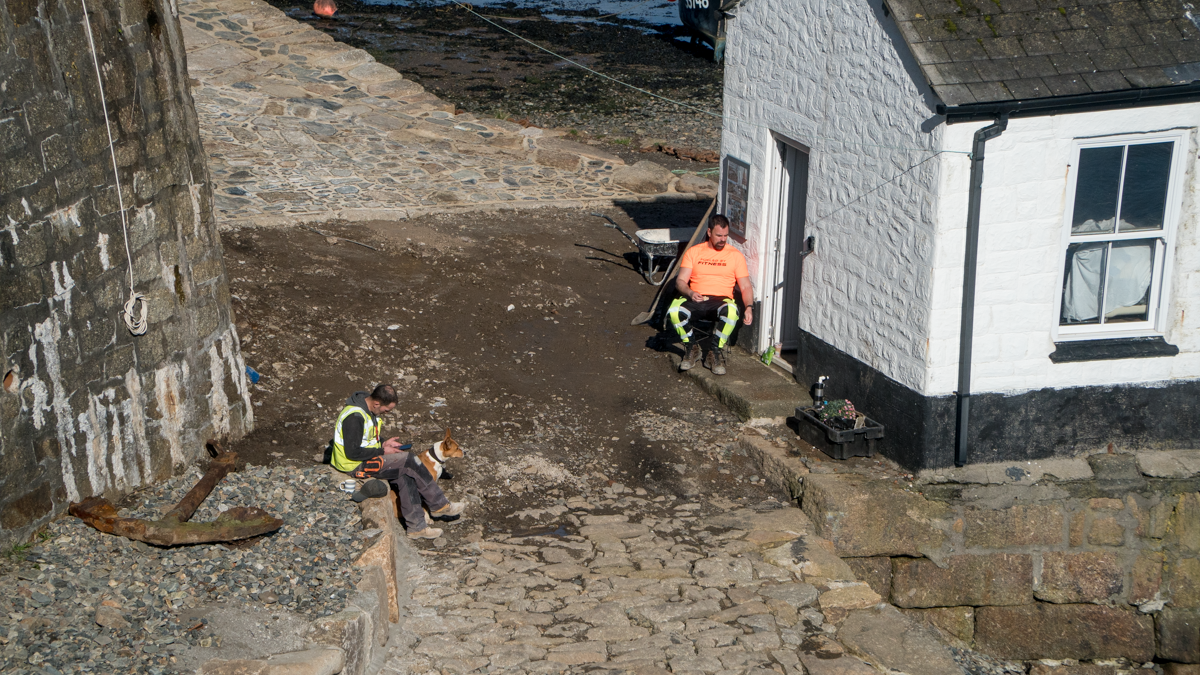
With the contractors from Symons now able to focus on reinstating on the access road the remaining surface was scraped down using a swing shovel. It became apparent to the masons that there was a very obvious edge feature to the huge flat stones that they had now revealed. Immediately, an archaeologist and architect from Historic England were called in to assess the findings. Their conclusion matched what the masons had thought – that this was the edge of a much older access road down to the Old Quay.

The masons also pointed out that the infill in the older section contained a lot of ochre coloured clay soil – just the same as had been discovered when re-pointing the parapet wall last year. This would suggest that they were completed around the same time as the infill between the newly discovered edge and the outside edge does not contain clay soil at all.

Their conclusion matched what the masons had thought – that this was the edge of a much older access road down to the Old Quay. The style of the stonework in the outer, newer edge is very different to the earlier as can be seen in the lower left photo.

tar marks

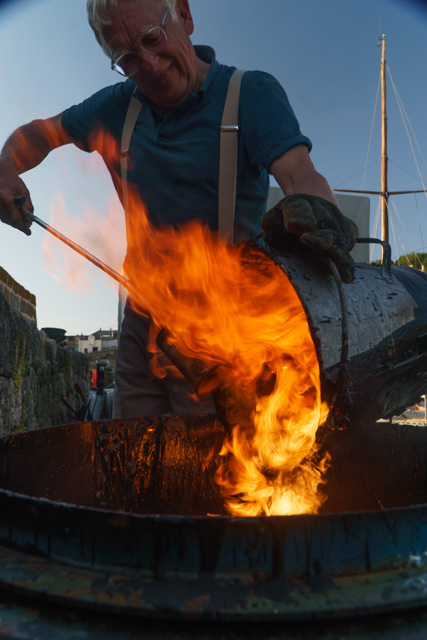
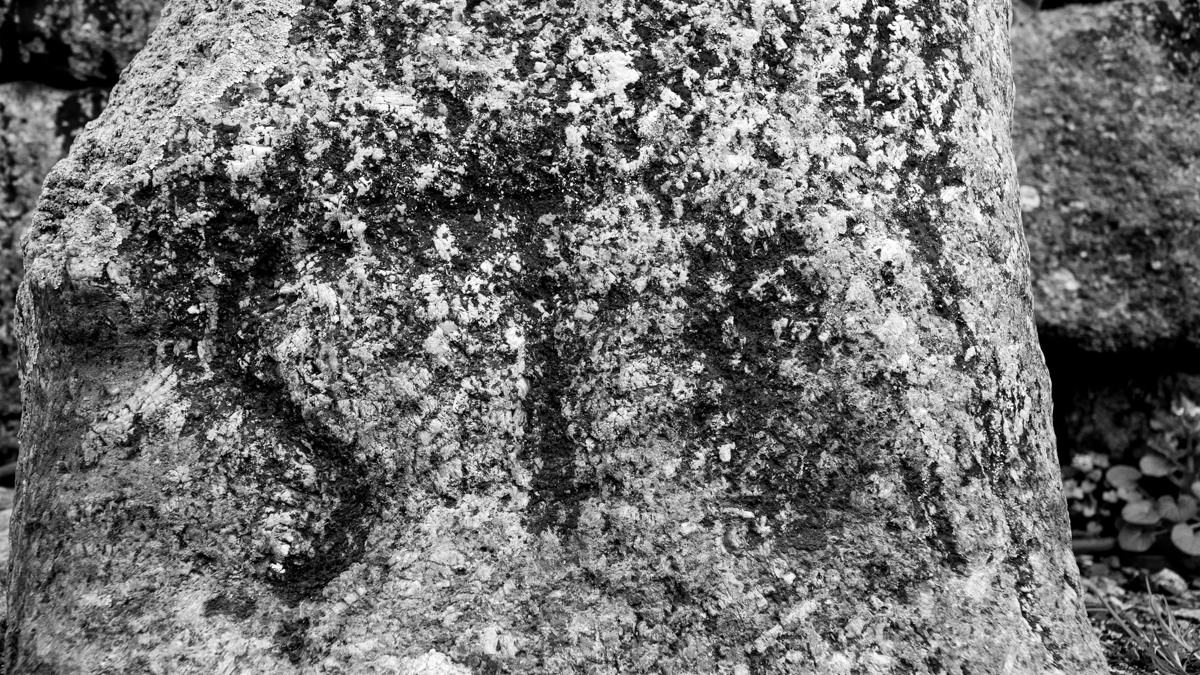
Above: Some of the edge stones still bear traces of tar running down the faces. If you look carefully, surface tar is a feature found all over the Old Quay, a material used in its molten state by fishermen to protect nets and wood rotting from fresh water.

Left: Further advice from Historic England gave the masons the go-ahead to excavate between the old and new edges. It became even more clear that this was indeed the edge of the earlier access road.

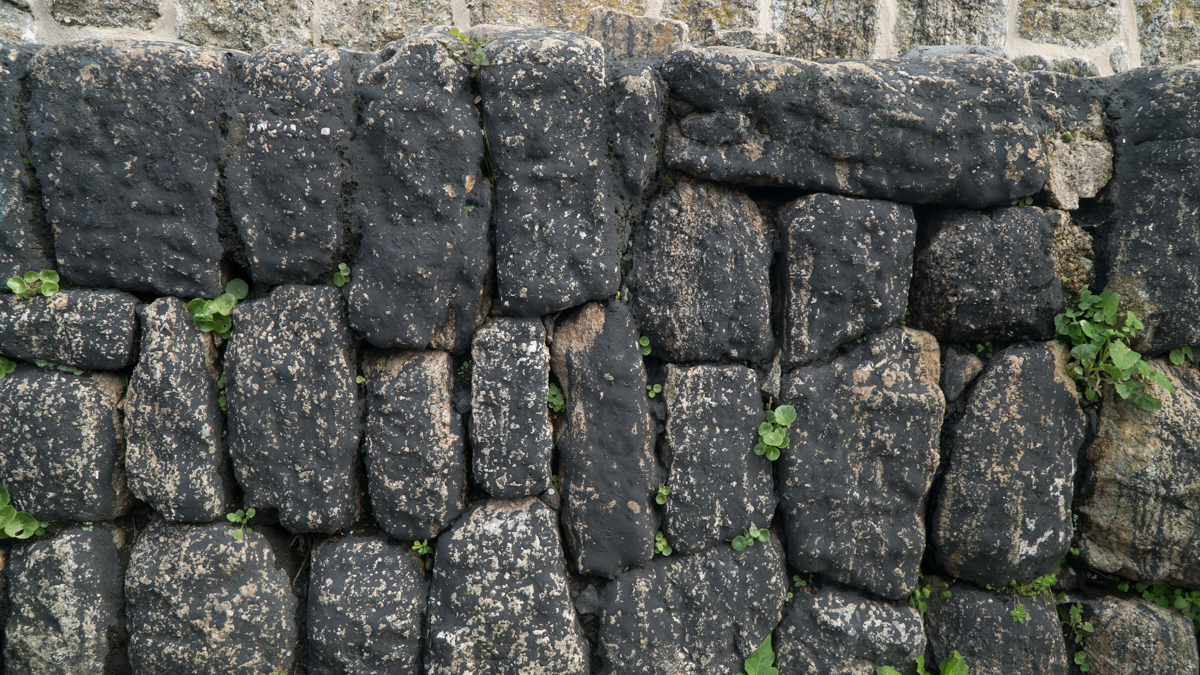
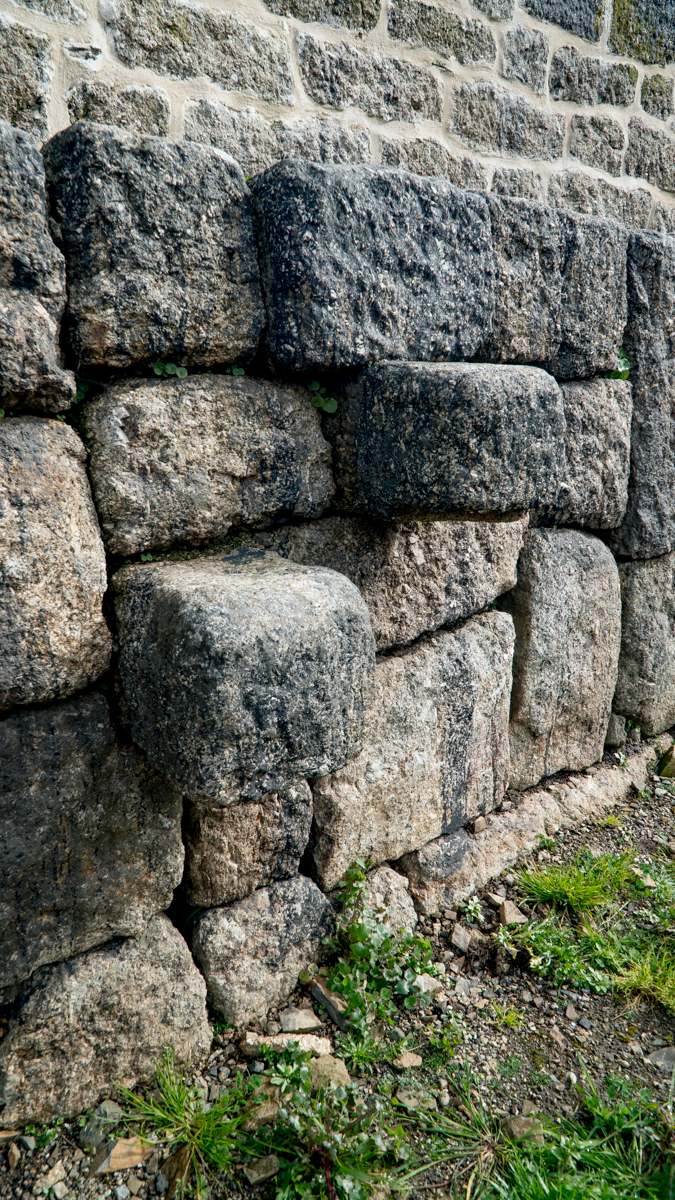
Evidence that the access road was widened has become increasingly apparent upon inspection of the retaining wall. Now cleared of decades of ivy and overgrowth, the structure reveals several distinct masonry styles. Notably, the left-hand section lacks the skilled craftsmanship found throughout the rest of the harbor walls—offering clear proof that this portion is a relatively modern addition.

Left: Closer inspection of the walls also reveals evidence that the stones used in the ‘new’ retaining wall were recycled. Many bear traces of tar as can be seen elsewhere on stonework in the harbour.

Right: However, closer inspection reveals that the tar runs in both horizontal and vertical directions, a sure sign they were previously used in a wall where fishermen maintained their fishing gear and boats.

tar marks

Both photos show stones in the retaining wall of the access road. Some stones are entirely devoid of tar, others quite clearly show where molten tar has run across the surface – yet some of these clearly show the tar running in a horizontal direction – proof that they were previously from a much older wall.

Overlooking the access road stands a retaining wall, constructed by the Penzance Council in the 1950s. This structure followed the demolition of local cottages and fish stores—a project designed to widen Fore Street for improved safety and navigation. The expansion was specifically driven by the increasing volume and scale of HGV traffic transporting stone from Penlee Quarry.

Much of the wall’s material was likely salvaged from the razed cottages that once occupied the site of the current grass embankment. Interestingly, these stones still bear traces of a common local practice: applying tar to the lower three feet of a building to ward off dampness. This traditional weatherproofing remains a visible architectural quirk in the area today, often preserved through the use of black paint on external walls.

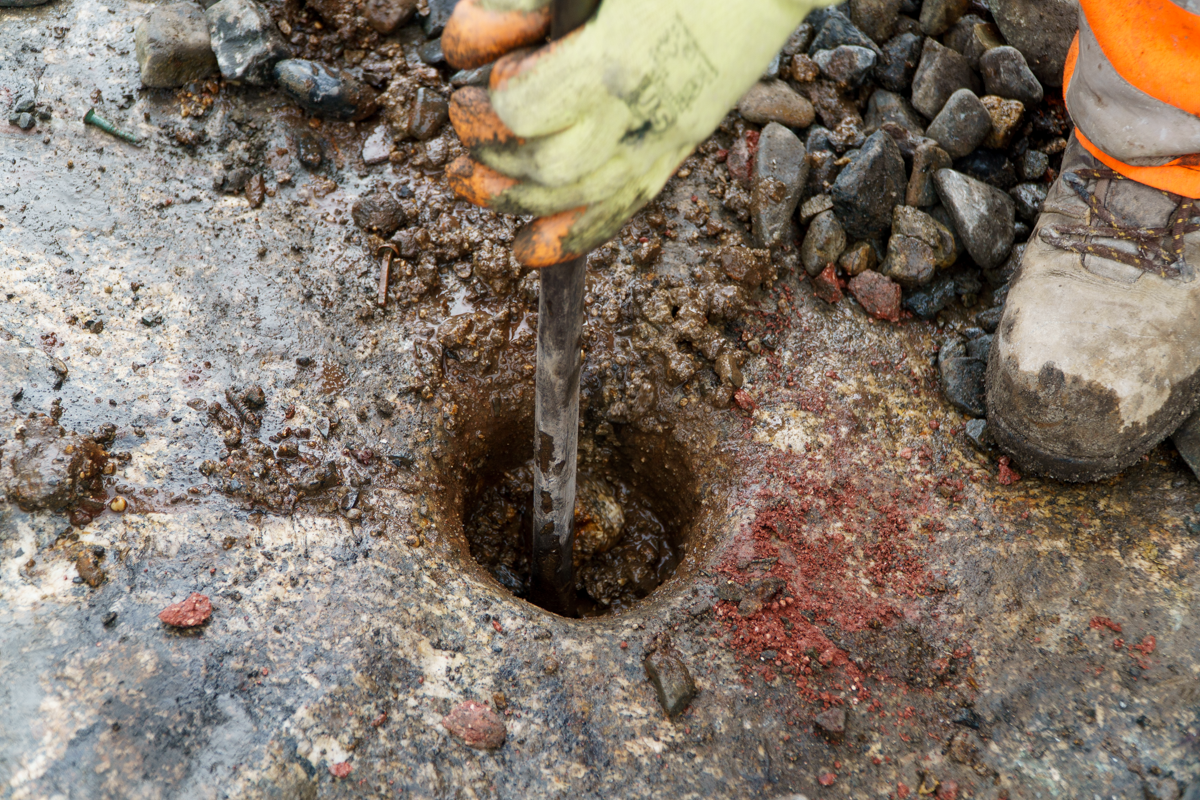
At the same time, work has begun on making good the surface at the top of the access road. This proving a challenge as the concreted section is made of blue elvan grit – and, as any local builder will tell you, it creates the hardest form of concrete known to man.


Right: You can just see the line of granite stones that helped protect the cottage wall from cart wheels coming down the access road. They too have tar on their outside facing edge.

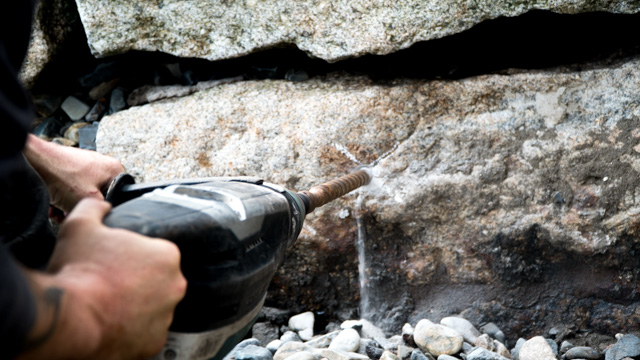
Below:  Blue elvan granite chipping concrete challenges even the biggest hammer drills.

The top section has now been removed and re-concreted and now includes a channel which drains into the harbour and prevents water during heavy rain running across the access road.

With a base layer of aggregate and concrete used to fill in the trench, work has now begun to replace the missing sections with salvaged granite and blue elvan stones. In some places, missing stones have been located and re-fitted.

Your content goes here. Edit or remove this text inline or in the module Content settings. You can also style every aspect of this content in the module Design settings and even apply custom CSS to this text in the module Advanced settings.

The same section a few days apart – much of the old layer has now been re-instated with stone retrieved from around the harbour.

Old Harbour latest – Final masonry works now completed.

Progress Update: Final Masonry Works at Newlyn Old Quay

The restoration of the Grade II* listed Old Quay is now approaching its concluding stages. Designated as a “Heritage at Risk” site by Historic England, this medieval structure is undergoing essential stabilization to ensure its long-term structural integrity and continued use as a working harbor.

Current works are focused on the final re-pointing of the quay’s parapet. This process utilizes a specialized lime mortar, analyzed and specified to match the historical composition of the original masonry. By replacing decayed cement and vegetation with this breathable, traditional material, the project is successfully mitigating the water ingress that has threatened the quay’s core.

In conjunction with the masonry repairs, significant progress has been made on the Red Lion slip. The project is overseeing the renewal of granite setts across the slipway, replacing modern tarmac and debris with over 350 square meters of Cornish granite. These stones are being meticulously bedded to restore the slip’s 19th-century profile, providing a durable surface suited to both heritage conservation and modern maritime requirements.

Supported by the Newlyn Pier & Harbour Commissioners and Historic England’s Heritage at Risk Capital Fund, these final works represent a significant milestone in safeguarding Newlyn’s maritime infrastructure.

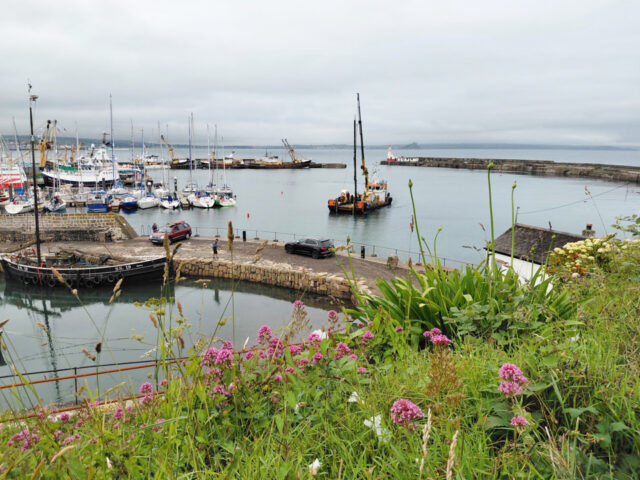
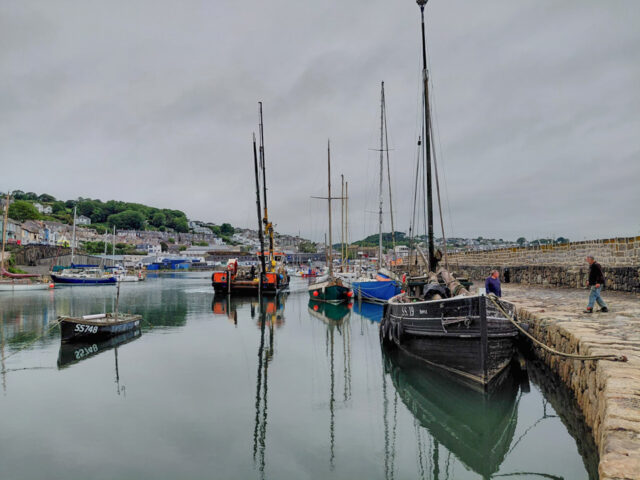
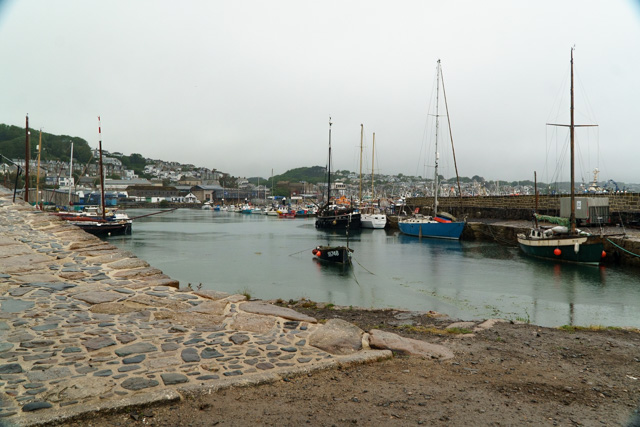
View over the old quay, one of the few fine weather days in December
Old Quay and Red Lion slip - work completed!
previous arrow
next arrow
 
View over the old quay, one of the few fine weather days in December
Waiting pallets of new granite setts.
Final sett laying in progress.
Final stages in preparing the grit bed
Three days to go before the Xmas break.
Finding the right length stone
Raking in the final grit layer
Lining up the last few setts
Red Lion slip now complete
Looking at the top of the slip
The Old Quay parapet pointing is now complete
The top of the Old Quay parapet
The next stage - breaking up the old tarmac on the access road.
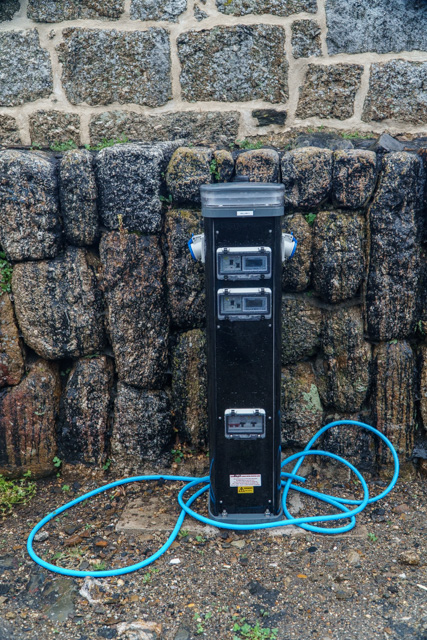
Connecting up the water and electricity bollards on the Old Quay.
previous arrow
next arrow

Parapet mortar work complete

The scaffolding has come down and the lights have gone up – the pointing work on the parapet wall is now complete,

,The Sedgeman crew came and removed the scaffolding just in time for Rob and CMT volunteers including Chris Yacoubian, who supplied the lights, to showcase the Barnabas in the Old Harbour as a star feature of Newlyn’s Christmas Lights.

Red Lion slip restoration work

Work to re-surface the Red Lion slip with granite setts is nearing completion.  In all, over 350 sq metres of cut and dressed stone supplied by Cornwall Granite Supplies has been delivered on site. the team from Symons Construction are nearing the end of the work to restore and improve access via the Red Lion slip to the inner harbour area.

The Red Lion slip in the 1800s
Laying the Red Lion slip
PlayPause
previous arrow
next arrow
 
The Red Lion slip in the 1800s
Red Lion slip prior to restoration project
Bring in the swing shovel to clear the slip
Loading the dumper with topsoil and growth
Digging out the old adit stones
Loaded dumper truck in the Narrows
Levelling the slip before the aggregate base is laid
Levelling the base layer
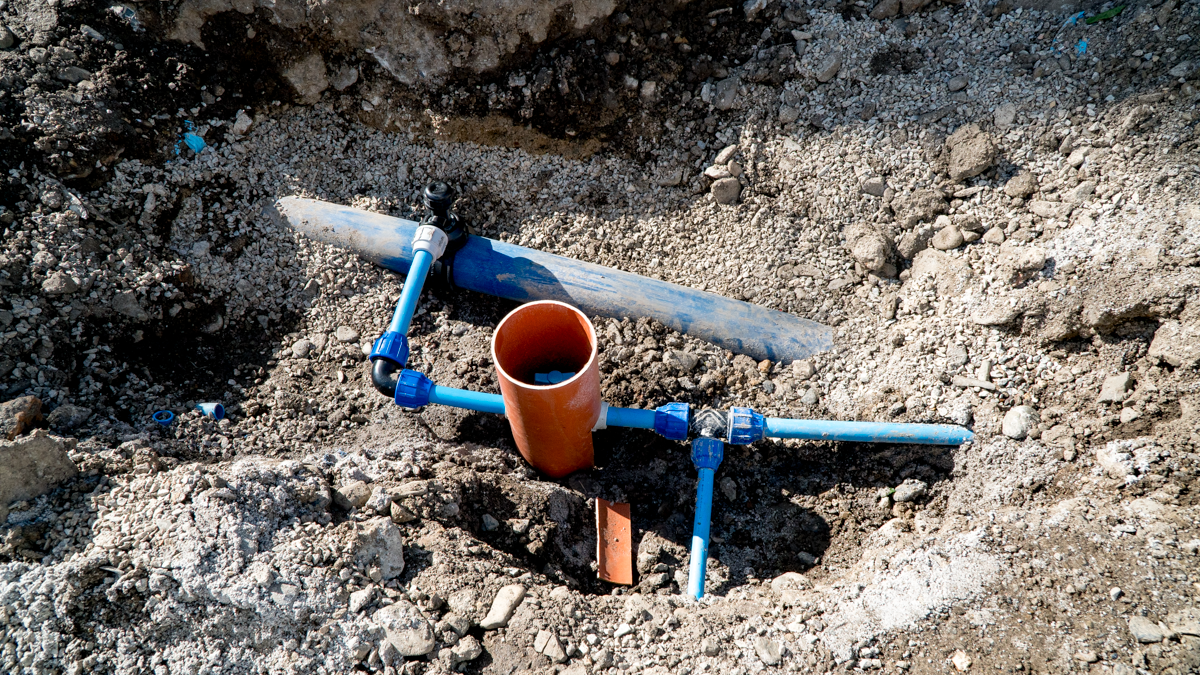
Excavations revealed old adits from Church St
Huge granite stones from the old adit channel
Laying the aggregate base
Partially compacted aggregate on the Red Lion slip
The aggregate base after compacting
Freshly worked granite setts
Preparing the bed for the first sett
Digging out a deep channel for the first sett
Laying the first row
The first cut granite sett is almost complete
Each sett is laid with a selection of different length granite
Easing the granite into position
Wooden wedges accurately position the stone setts
Key rows require mechanical help to lay each stone
Smaller stones can be placed using the suction tool
The Red Lion slip is taking shape
Lime mortar pointing the slip edges is underway
The slip is now three-quarters complete
previous arrow
next arrow

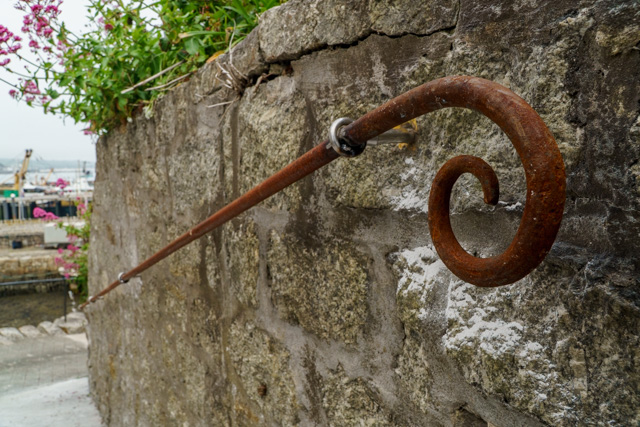
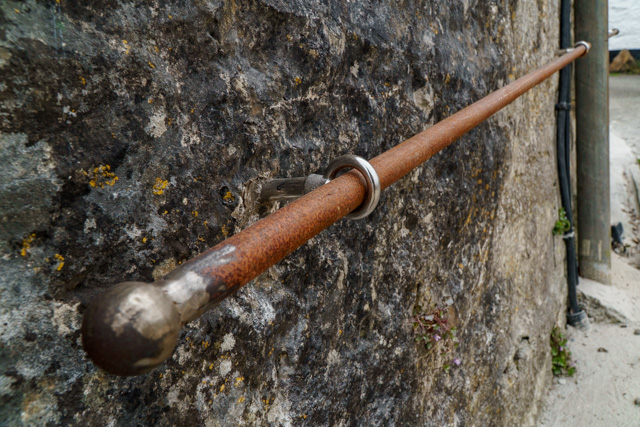
Once the new stone setts have been installed attention will be turned to completing repairs planned for the wrought iron handrail that runs the length of the slip. 

Before vegetation was removed

The steps are now revealed

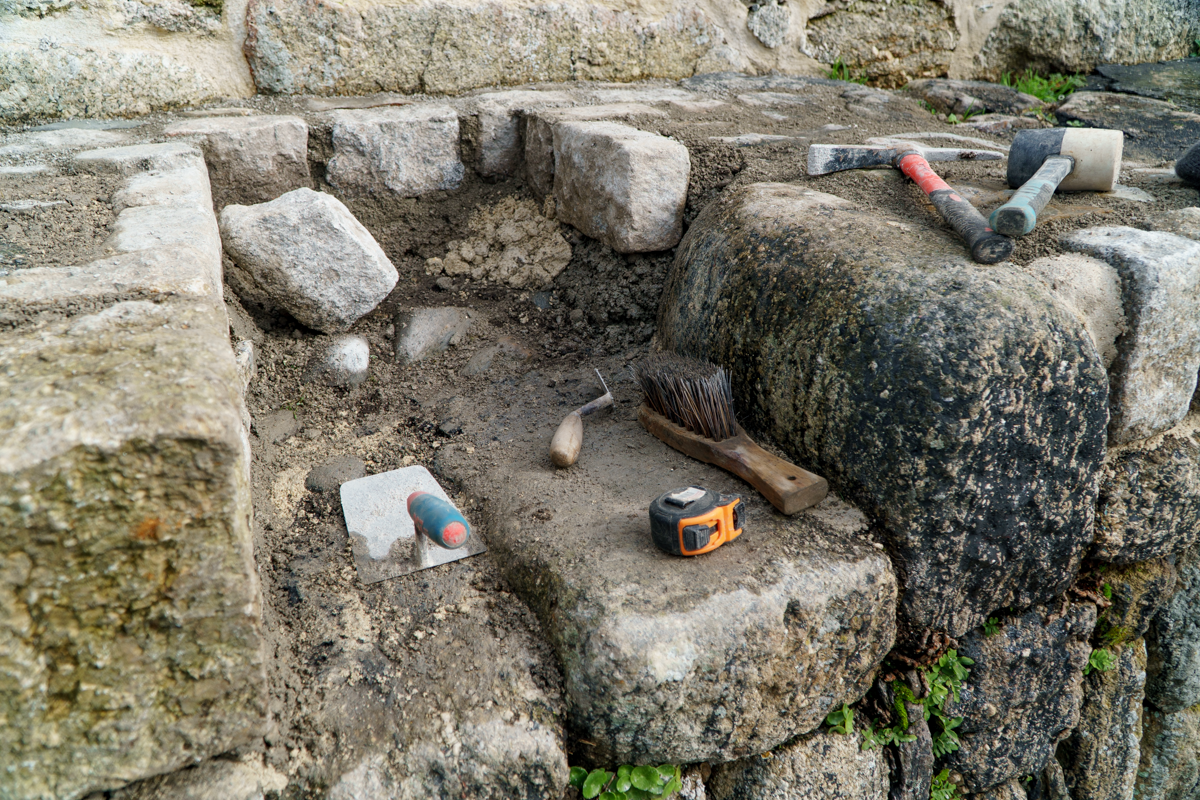
While clearing overgrown vegetation, the centuries old access steps from the edge of the Red Lion slip were revealed.  The steps are simply long granite stones that stick out from the side of the slip wall – styles with steps like this are a common site in Cornish hedges.  The lowest of the four stone steps appeared to have been broken off at sometime. Since then it has come to light that the step fell into the harbour in the 1980s – as witnessed by two young fishermen who recalled the day it happened. Over recent months many individual granite stones have been cleared from in and around the Old Quay – it is hoped that one of these is the missing step and can be replaced!