Finishing touches – signage is up!

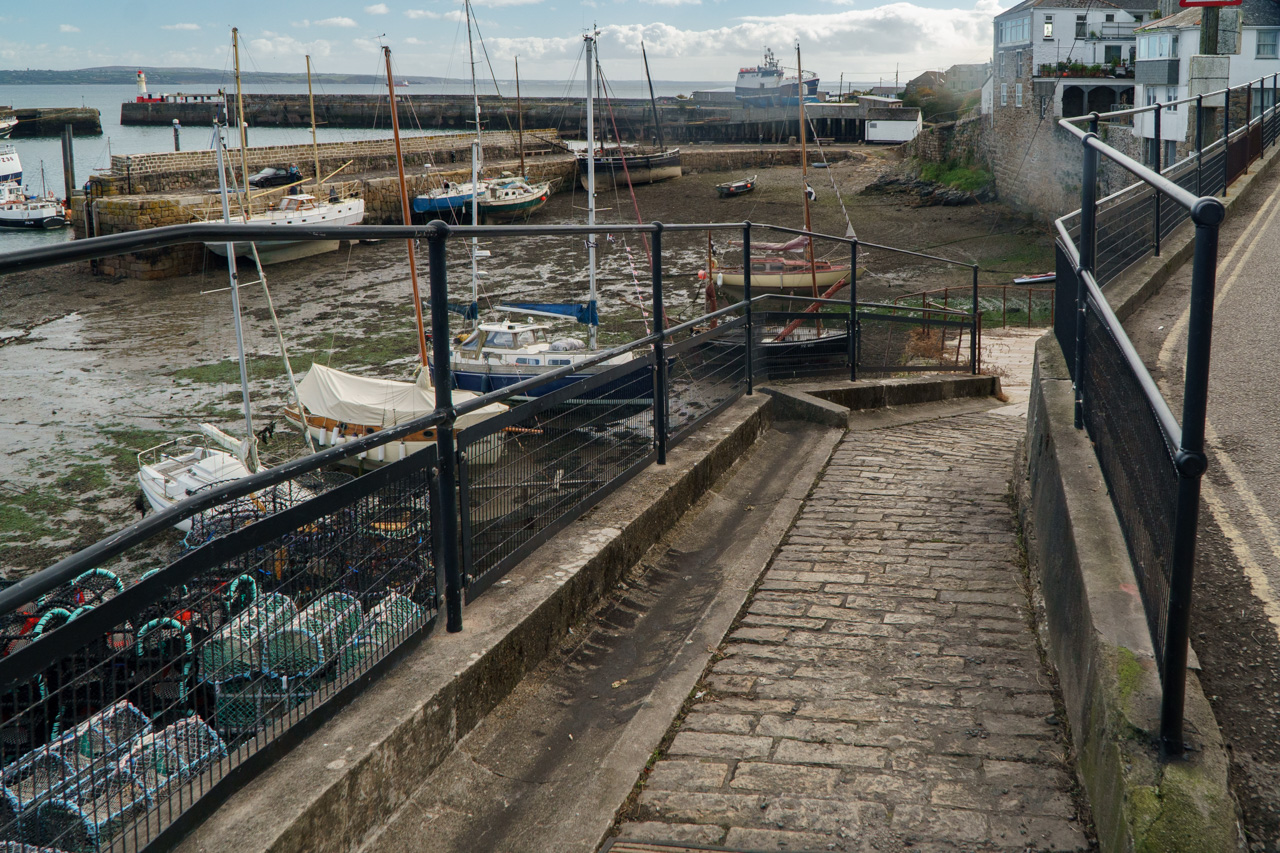
With the Old Harbour now operating as a busy working spot, a few new signs have been sorted out to keep folks informed. Just at the top of the access road heading down to the Old Quay, an information board gives visitors a bit of background on the harbour’s history, alongside a n acknowledgement of the financial support from Historic England, the arbour and Penwith Council.

The signs were produced by local signwriter Suzy Currel from Muddy Crekk signs. She said, “I’m committed to restoring beauty to our built environment by reviving the craft of traditional signwriting, and I feel honoured to have been entrusted with the job of making new signage for such a historic corner of Cornwall.”

These small but significant touches have added to the overall appearance of the historic harbour and will help inform both users and visitors in the future of the working conditions, by order of the Harbourmaster!

Old Harbour historic information sign
previous arrow
next arrow
Old Harbour historic information sign
Parapet access sign
Old Quay parapet access sign
Chains and ropes warning sign
Tender mooring  sign
Mooring sign
previous arrow
next arrow

The unintentional voyage of Joe Treneer aboard the Alpha.

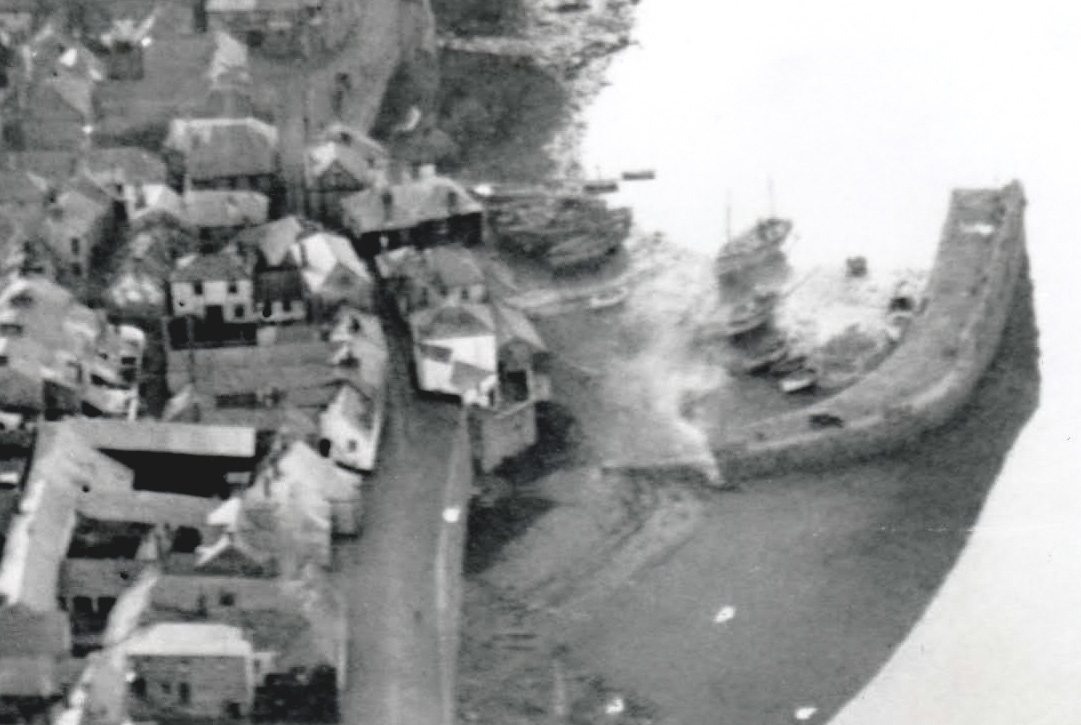
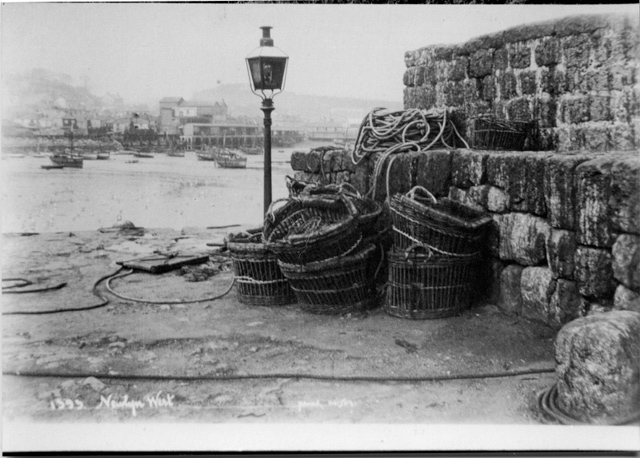
As work continues to preserve the historic fabric of Newlyn Old Harbour, it is always worth remembering the fishermen who relied on its shelter over a century ago. The archive photograph below captures a glimpse of this era, showing vessels nestled within the harbour  walls. Following the construction of the South Pier in 1885, the local fleet grew significantly, and the harbour once maintained an impressive fleet of about 400 boats engaged in the mackerel and pilchard fisheries.

Exploring the archives turns up some remarkable accounts of life—and near disaster—on this stretch of the Cornish coast. Back in April 1899, a severe gale hit bay, tearing the fishing boat Alpha from its moorings right inside the harbour and sweeping 71-year-old local fisherman William Treneer out to sea. His incredible survival, enduring days adrift before being picked up by a passing steamer and put ashore in Gravesend, Kent, became a national news story.

What follows are the original newspaper reports that documented the frantic wait for news back in Penzance, concluding with Treneer’s own dramatic retelling of his unexpected voyage once he finally made it “home-along”.

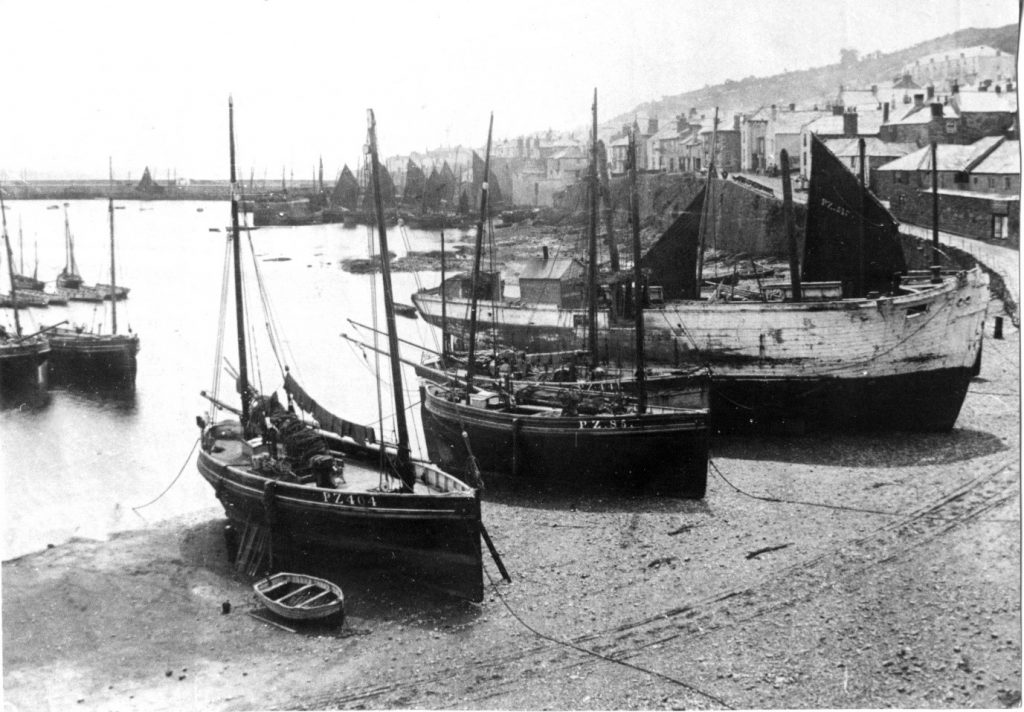
Mackerel drivers moored in Newlyn Harbour

Alpha, PZ85 on the beach between Newlyn Town and Street-An-Nowan

Manchester Evening News – Monday 10 April 1899

A FISHERMAN RESCUED.
William Treneer, the aged Newlyn fisherman, who was swept out of the harbour into the open channel was rescued by a passing steamer and taken to Gravesend.
Sixteen East Country boats are unaccounted for, and much loss of life is feared.

Cornishman – Thursday 13 April 1899 (Part 1)

WILLIAM TRENEER IN LONDON.
HIS ONE WISH IS TO BE DESPATCHED “HOME-ALONG.”
The Austro-Hungarian steamer Zrinyi arrived at Bellamy’s Wharf, Rotherhithe, on Monday afternoon, (says Tuesday’s Daily Mail) having on board the man who was carried off when the Newlyn fishing fleet broke away in the gale.
His name is William Treneer. He had been out 24 hours when the Zrinyi took the boat in tow. The tow line broke four times, the old man’s boat filled up with water, and they had to take him on board the steamer.
“The is nothing the matter with me now,” he said, “but I do want to go home-along. Do try to send me home-along. Do ‘ee now, blees ‘ee.”
“I’m a Newlyn man born and bred, and there’s nothing the matter with me. Except that I do want to go home-along.”
“And where do these people come from? Hungary, is it? They’ve been very kind to me, but they don’t understand me, and I don’t understand they.”
Later in the day William Treneer’s wish was acceded to, and he was despatched home-along.

Cornishman – Thursday 13 April 1899 (Part 2)

THE SAVED AWAITED.
Three or four hundred people assembled outside the Penzance railway station, on Monday evening, to meet the last train, by which Mr. W. Treneer, who had rubbed shoulders so closely with grim death, was supposed to be returning. The gates of the station were closed and only a favoured few allowed on the platform, but when the train steamed in and the passengers got out it was found that Mr. Treneer had not arrived and so his Newlyn and Penzance friends were not able to give him the hearty welcome hoped for.
THE ALPHA ADVENTURE.
Mr. William Treneer, the old man who was carried to sea in the Newlyn fishing boat Alpha, which broke out of the harbour last Friday morning arrived at Penzance, by the 7.25 a.m. train on Wednesday, from London where he had been taken by the Hungarian steamer which picked him up 18 miles from Start point.
He is very stiff and sore from exposure, but otherwise has not suffered.

Cornishman – Thursday 20 April 1899

THE VOYAGE OF THE ALPHA.
WILLIAM TRENEER’S EXPERIENCES, AS TOLD BY HIMSELF.

Mr. William Treneer, whose adventures in the Alpha fishing-boat, which broke out of Newlyn harbour on Friday morning, are pretty well-known, arrived Penzance by the 7.25 a.m.train on Wednesday, after travelling all night from London, where he was taken by the steamer which picked him up in the English Channel. Shortly after his arrival at the house of his son, Mr. Joe Treneer, at Newlyn-town, on Wednesday morning, he was seen by our representative, to whom he related his experience during the previous five days. Mr. Treneer, who is 71 years of age, looks very well, considering what he passed through. Naturally enough, he is still stiff and sore from exposure and the bruises he received from the tiller striking him pretty often, but the old man’s nerves have stood the strain remarkably well.

“We were moored,” he said, “in the harbour, as usual, on Thursday night, and I slept on board The wind woke me early in the morning, and, as I was putting on myboots, I felt something crack into the boat, and it knocked me down in tbe cabin. I ran on deck for my life, and found we were going away—stern first—and I could not hitch to anything. I threw a rope to an East-countryman but he left that go.” His son, Mr. JoeTreneer, here interposed with the remark that the East-countryman said tbe rope never reached him. Mr. Treneer, senior, continuing, said, “When the wind parted a Porthleven boat she came down flying,and her stern cut away the Alpha’s mooring rope, and then she went flying. Out she comes and through the harbour. I went and heaved two anchors out, but they would not hold. She dragged down east of the Mount, and would have gone ashore east of the Green, but I cut one anchor away, having let go other belore. We passed close to Cuddan-point, Trewavas head, and then close to Mullion island. I was laying down steering, so as not to be washed overboard, but every now and then the tiller struck me on the chest.”In reply to a question as to the statement that the boat was seen off Marazion, apparently water-logged, Mr. Treneer said “There was no water in her more than I could cope with by the pump.

“Next we got close to the Rill, over the shoals, and the seas rose up as if they were going to swamp her. But,” enthusiastically exclaimed the old man, “there was no swamping her! I would not be afraid to go over the world in her—if there was canvas on her. We cleared the Rill, and then I was afraid she would not go by tbe Stag rocks at the Lizard. The Alpha went along S., and sometimes S.W., going like a steamer when she got the wind upon the quarter. But I soon saw she was all right for the Stags, and at last she got by. Then I wore her with her head to the eastward, and unshipped the tiller, because I was afraid would break the rudderhead. She drifted down to the Manacles, and I was obliged to wear her again to clear the rocks. Then I thought I would have a drop of tea. (There was always a fire on board.) So I hove-to inside the Manacles and had some tea.

This was about six o’clock on Saturday morning. Asked whether he saw anything of the Cadgwith lifeboat which was out looking for him, Treneer said ” I was never off deck; no liieboat, or man, woman, or child did I see; and I was looking all over the world. After this the wind flew to N.N.W., and the drift of the boat was then south-east. ‘Now,’ I thought, “I shall not see anything,’ and the spray was going over in sheets, and I could not see ihe land. We continued to drift until four o’clock in the afternoon, when Hungarian steamer (the name of which Mr. Treneer could not remember) came up and took me. I asked the captain, when we got to London, how far I was from the land when he picked me up, and said I was 48 miles SS.W. of Plymouth. I took ropes from him, and he took me in tow, I steering for two hours and a half. Then the ropes broke. They came round and took me again, but in about a quarter of an hour the ropes again parted. Then the pump failed, and the water rose to the fire- place. They heaved a rope again, but I fell upon the deck, and had not any power to make it fast any more. Then I was taken on board. We were 18 miles from the Start. They carried me to the bed- cabln, and put to a warm feather-tie and pillows and clothes the same. They padded me all round, took off everything from me, and put up dry clothes. Then they gave gin to wet my lips, and hot tea. Then I came to myself a bit. Two men went down to the boat, but the rope broke again, and then she was left to go—about 13 miles from the Start. And we continued our voyage to London. Clever men they were! ”

So you were treated all right ? Our representative ventured to remark. “Don’t tell about well’ ” exclaimed Mr. Treneer. “Never hear a foreigner run down any more! They brought me fowls, eggs, wine, gin, every kind of thing you can mention, seven or eight times a day, and the captain constantly came to see how I was going on. One man asked if it was worth while to put me the hospital; but the captain says, “He shall never go to the hospital from this ship. I will go ashore and see what I can do. ‘ He went ashore and came back and told me he had made things all right.

We arrived at Gravesend on Sunday night, hut I don’t know anything about that, because I was in bed for two days after that. “Soon after we arrived a gentleman came aboard, and was told that the steamer had brought in a man who had been picked up sea. He came to me and said “What’s your name?” “William Treneer,’ savs I. He says ‘You’re drowned.’ ‘No,’ says I. ‘I am not drowned: l am living aboard this steamship.’ He read a caper to me which said I was drowned. He asked if he should send a telegram. should send a telegram. 4 ‘Yes,’ says I, ‘send as many as you like.’ Replying further questions Mr. Treneer said did not hear that the Alpha was safe at Brixham until that morning, when be was told the train. As his state of mind while drifting he said he never felt any different than if was ashore. When saw dangerous sea coming he used to jump down in o the cabin, so that he should not be carried overboard. The wind and sea carried away tbe rigging aft, her bulwarks were beaten away cn the port side, and one or two stanchions had gone. Mr. Treneer was unable to see much London, but he was amazed the mass and intricacy of the traffic the streets, and once had a small adventure in getting lost. He was travelling with two gentlemen in a train, but be took a long time to alight from the carriage after them, and the result was he was taken on further than he expected. However he was overtaken few minutes. all events he will long have cause to remember the memorable Cruise of “The Alpha.”
History made!

Making it happen!

Enjoy this sequence of photos recording the event to make history come alive – all made possible due to the efforts of the project team together with financial and practical support from Historic England and Newlyn Harbour.

History in the making

This historic photograph, taken in 1888, shows how sailing fishing boats used the beach off the Old Quay to anchor – or kedge. At the time it was taken, the North Pier was still under construction and the rapidly growing fleet of pilchard luggers was taking full advantage of the protection from the weather offered by the the new South Pier.

Wind the clock forward 138 years to July 2026 and the Cornwall Maritime Trust, now based in the Old Harbour, organised a Party on the Beach to re-create such a scene. What is even more remarkable is that the CMT’s Barnabas could even be in the is old photo as she was built some 145 years ago in 1881!


Party on the beach - the stage is set
previous arrow
next arrow
 
Party on the beach - the stage is set
ITV News film CMT Artist in Residence on the Old Quay
Flying the flags
Party on the Beach - some boats have arrived
ITN News artist interview
Capturing the scene on canvas
The smallest boat, from Brittany, arrives
There's only one way to get aboard
Is the canvas big enough?
Another historic view captured on canvas
Paella is served!
More boats moored inside the Old Quay
Party on the Beach basks in the evening sun
A sea of masts and people
100 year old classic fishing boats
The restoration work gets the thumbs-up from the CMT
High notes and low notes
Enjoying the spectacle
A late arrival to the party!
The old and the new
Boats party on the beach
Guide Me crew set off rowing to Mousehole
High water - time to set sail
Some boats didn't get off the beach!
Early birds catch the scene
Sculling off the beach
Guide Me rowing for Mousehole
Just enough wind to get going
Hitching a tow to Mousehole
Waiting for the next high water
previous arrow
next arrow

Newlyn Old Harbour Brought to Life with Inaugural ‘Boats on the Beach’ Event

On Thursday, 2 July 2026, the newly restored Newlyn Old Harbour was transformed into a vibrant scene from the town’s fishing past during the inaugural ‘Boats on the Beach’ event. Organised by the Cornish Maritime Trust (CMT), the celebration drew members of the community, local artists, and visitors to witness a fleet of more than 25 historic working boats kedged onto the beach beneath the harbour’s granite walls.

The display featured a range of traditional vessels, from smaller craft to the 60ft 1878 Lowestoft drift netter Gleaner, the 1911 Looe dipping lugger Guide Me, and the 56ft pilot cutter Pegasus. The event served as the first realisation of a long-held vision shared by the Cornish Maritime Trust and the Newlyn Old Harbour Restoration Project: to see the harbour filled once again with traditional working vessels.

Attendees partied to live music from the bluegrass band Flats & Sharps aboard the 145-year-old lugger Barnabas, along with local seafood and drinks. The event was attended by the Lord-Lieutenant of Cornwall, Col. Sir Edward Bolitho, and the Mayor of Penzance, Cllr Andy Law, both of whom commended the collaborative efforts of the volunteers and agencies involved in the restoration and the event’s success.

The day also served as the launch of the Cornish Maritime Trust’s fundraising campaign to renovate ‘The Fisherman’s Rest’ on the Old Quay. The project aims to transform the building into a Maritime Heritage Community Hub, providing a dedicated space for schools, community groups, artists, and musicians to engage with Newlyn’s rich maritime history. Organisers reported that the event successfully raised an estimated £2,000 toward their £7,000 target.

A huge ‘thank you’ must go out to the band of regular volunteers who made it possible along with the invaluable financial and historic architectural support from Historic England and the local businesses that carried out the more technical construction and restoration work.