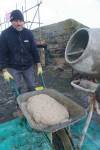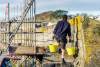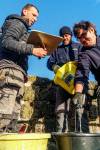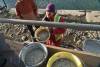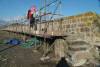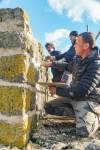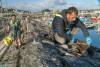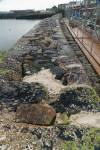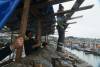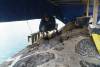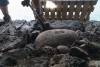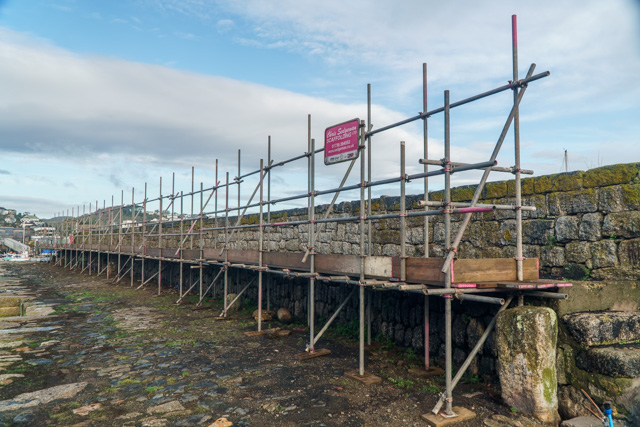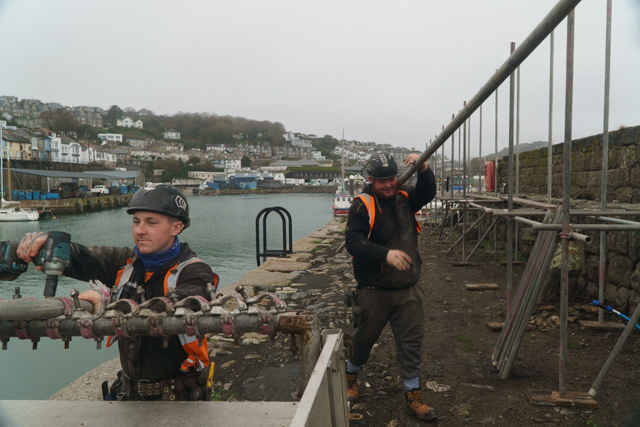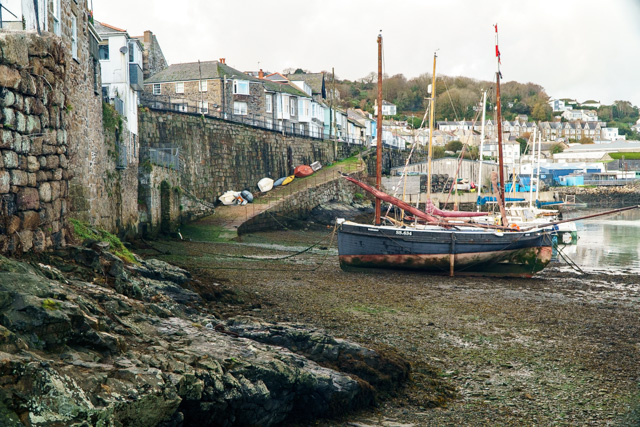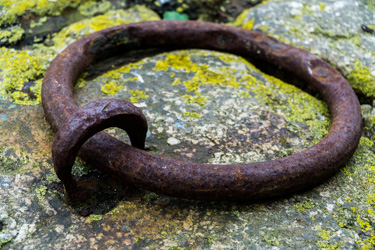
Following the excellent news that the Old Harbour restoration project successful Historic England bid the more challenging work of repairing and re-setting has begun. Some stonework has already been carried out, namely the re-stapling of capping stones and re-positioning of quoins on the edge of the Old Quay and the top of the slip by the old Rest.

Two key jobs are currently out to tender. The biggest of these is laying new stone to complete the Red Lion slip with granite supplied by Cornish Granite Supplies based in St Just. The second is re-pointing, using lime mortar, the Old Quay parapet. Samples of the original lime cement have been analysed for a match.

What may go un-noticed when walking along the Old Quay is that much of the surface was covered with tarmac – with two different mixes! One of these used what was tar mixed with the fine gravel found inside the harbour near the highwater line. These areas of the quay will be tarmaced once again in an effort to provide a smooth and safe a working/walking surface while meeting the Grade II listed buidling criteria for the quay.


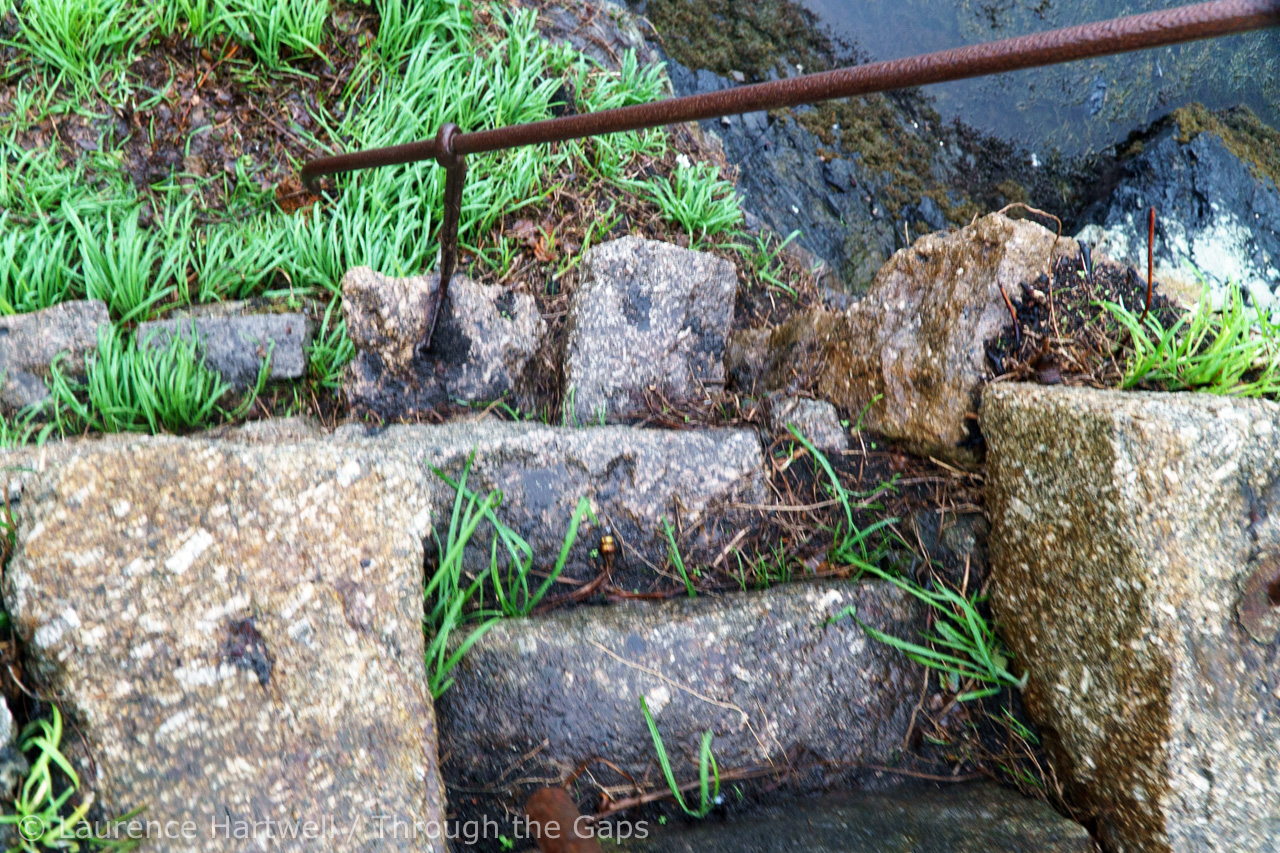
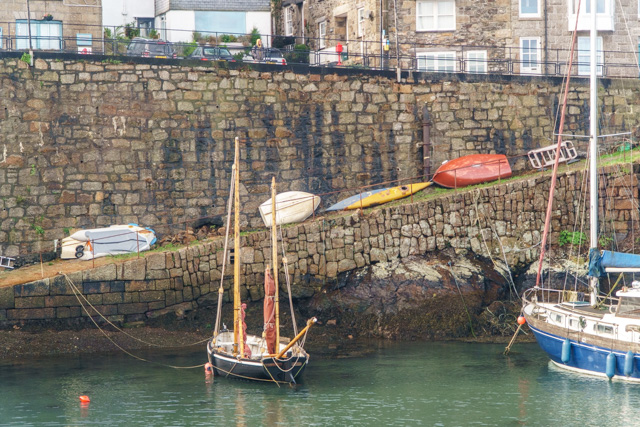
Edge stones on the short slip by the Rest have become dislodged over many years. This slip allows access for larger vehicles that can come across the beach from the slip at ower Green Street.

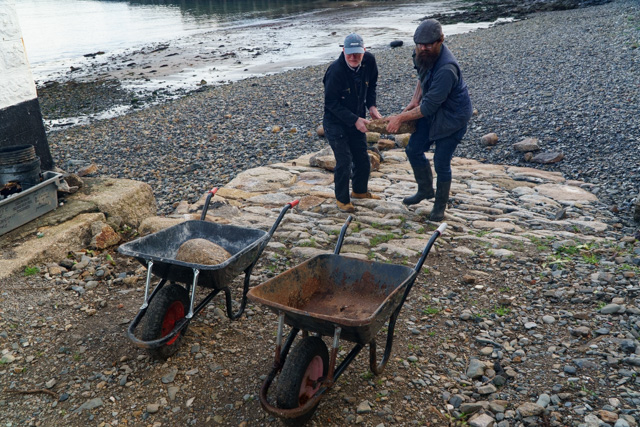
The larger stones were removed and underneatht them cleaned of debris that then allowd them to be replaced in their original position.

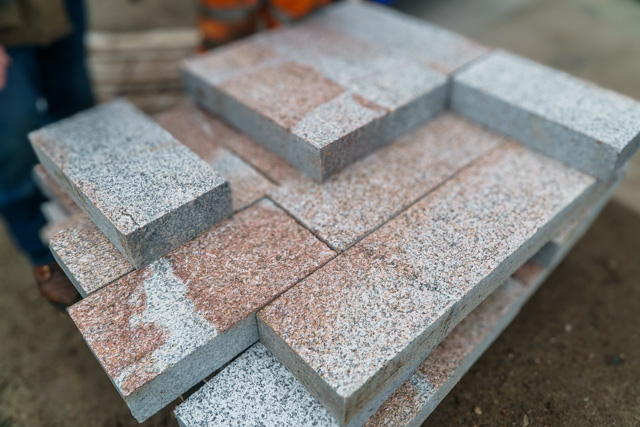
A sample bag of old granite sets has been delivered to allow for contractors to quote laying the new slip surface.

They will be laid on top of the old gash surface.

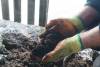
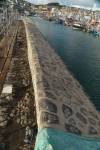
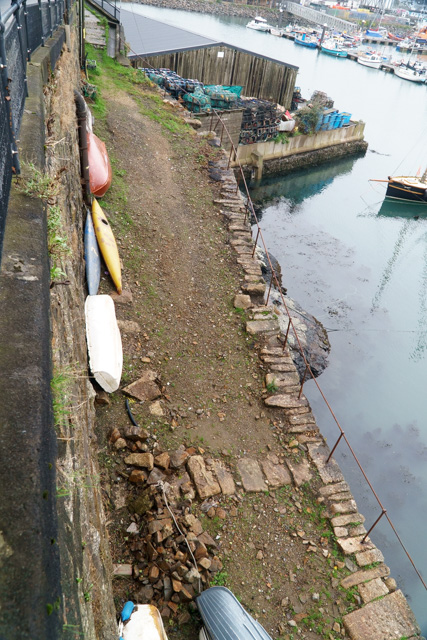
In this photo the full extent of the slip is revealed. A few youngsters are sat where the repair has been made. Today, the rest of the slip is covered by an accummilation of stone, soil and vegetation.

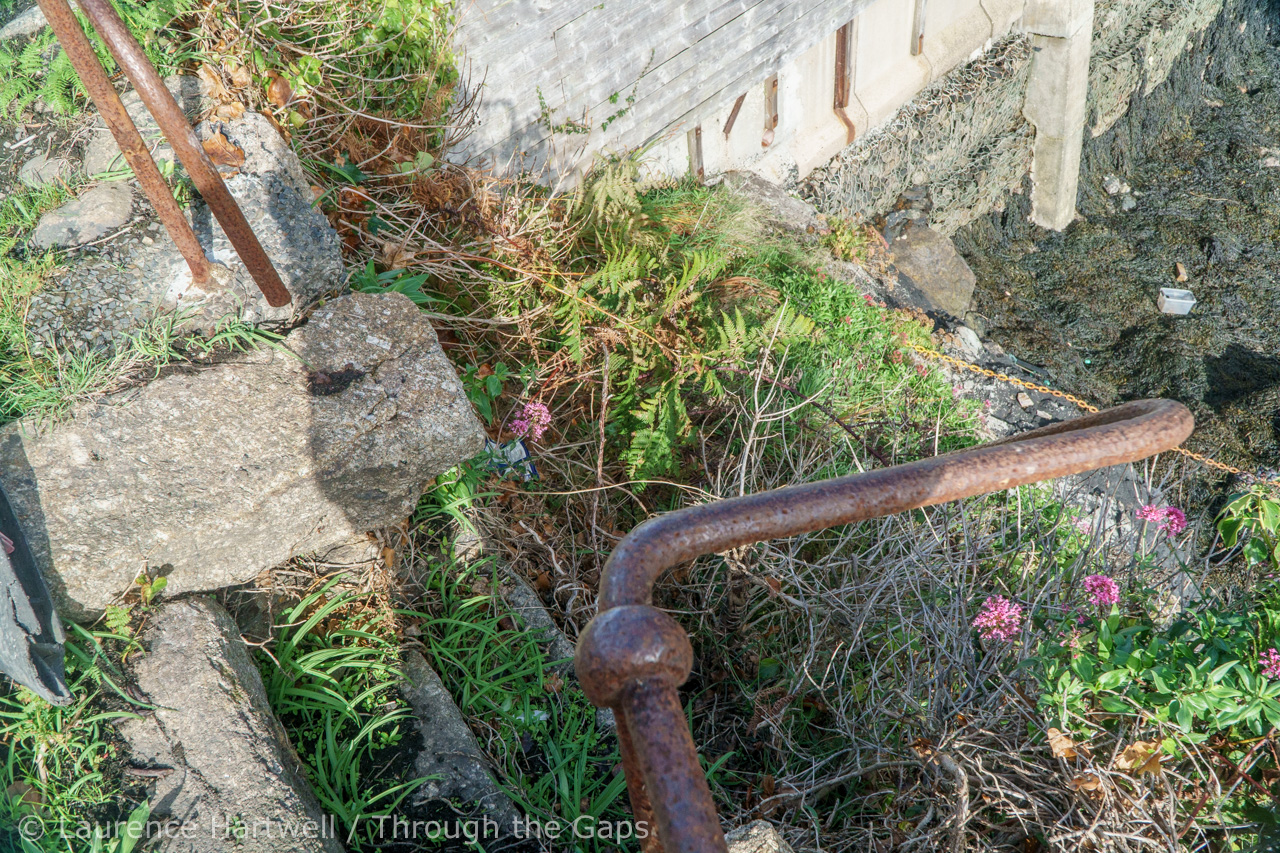
Looking down from the road outside the Red Lion the missing stones can be seen.

Completing the Red Lion slip in stone work will allow secure and safe access to vessels and across to the Old Quay.

The most severeky damaged edge stones were cited for repair or replacement.

Some edge stones, having been being stapled several times over hundreds of years, were deemed a safety hazard and therefore required replacement.

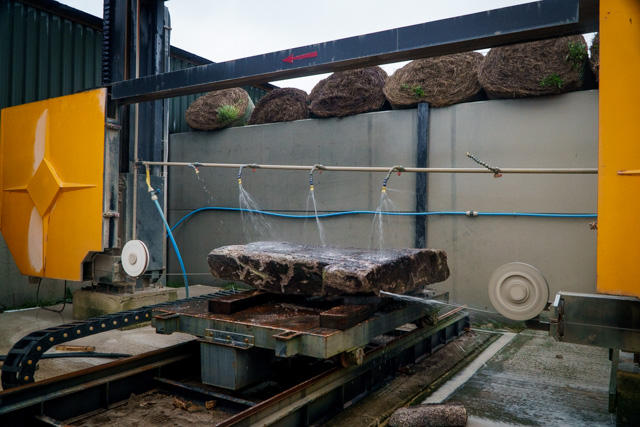
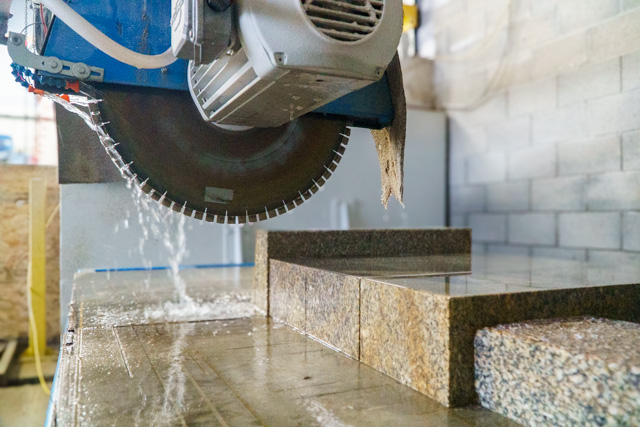
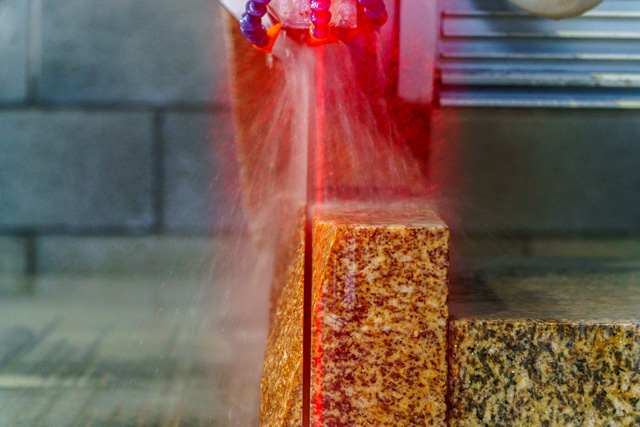
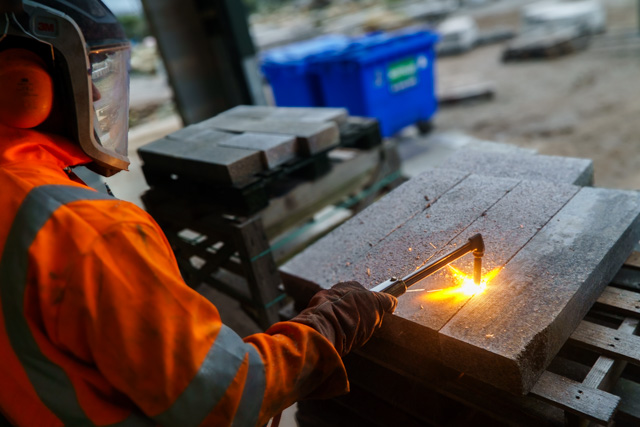
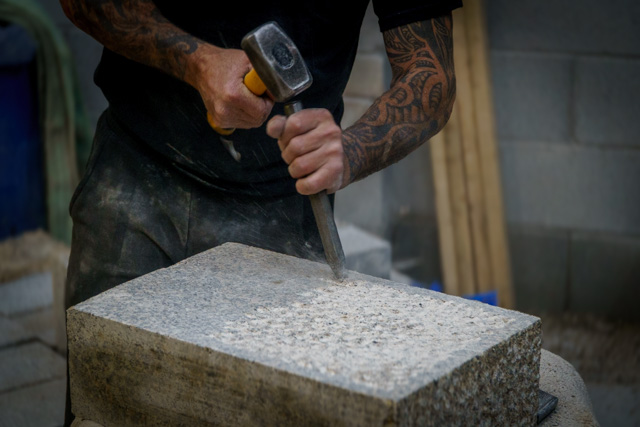
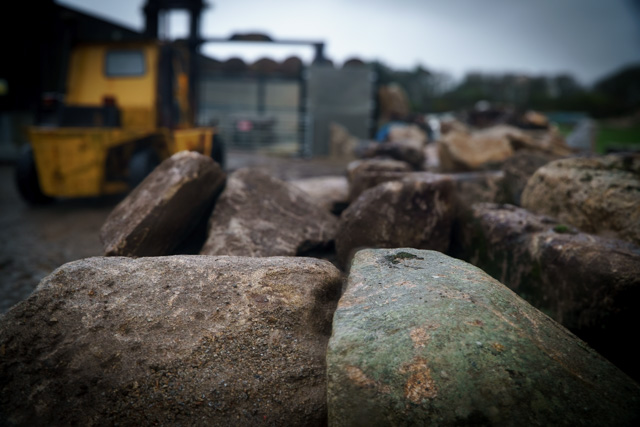
The replacement quoins used in fact came from the North Pier (1895). Two stones were selected but one had to be shortened to fit the space. The Cornish Granite Company at St Just cut the larger stone in half and cut both front faces vertical as they were sloping outwards and then ‘punch finished’ the front faces to match the top face. The North Pier has a sloping front face and quoins to match. The quoin that it was replacing was 60” long but had split into three pieces because of pegs inside rusting and expanding. The re-worked stones will darken in appearance soon enough and they were purposely fitted at different heights to match the rest of the old quay. The Old Quay parapet is still to be re-pointed in places with lime mortar.

The North Pier stones had been stored in theharbour car park for over 40 years.

The three cut stones ready to be re-worked and trimmed before fitting in place.

Waterdance very kindly lent the services of a driver and their Manitou front loader to lift the stones onto the quay at low water.

The Old Quay looking like it’s missing a tooth, with the stone ready to be fitted in place.

The temptation to throw these huge stones off the top of the quay back in to the harbour was just too tempting for some local lads – would be good of they could direct their energy into helping rather than hindering!

The newly cut and trimmed stones are now in situ.

In time, the re-worked faces faces will age in appearance to blend in with the rest of the quay.

Celebrating the Sardine Fishery and the Artistic Legacy of Newlyn

Celebrating Newlyn’s Sardine Fishery: How Artists and Heritage Shape Our Community

This weekend, Newlyn proudly celebrated its legendary sardine (pilchard) fishery with a lively festival that brought our maritime traditions to life. From bustling quays to the skies above, the event paid tribute to the industry that has shaped Newlyn’s identity for generations—and highlighted the vital role of art and heritage in preserving our story.

Historically, artists in Newlyn have been instrumental in shaping how the world views our fishing community. In the late 19th century, painters depicted our port as a timeless landscape—highlighting its simple, traditional buildings, fishermen and rugged scenery. Their work helped craft an image of Newlyn as an enduring, unchanging hub of maritime life . Today, that legacy continues through projects like those led by the Newlyn Old Harbour group, which actively support the restoration and preservation of our harbour.

Recently, the festival showcased contemporary artworks capturing scenes from our current sardine fishery, including striking images of the historic lugger Barnabas—now housed in the Old Harbour. The vessel not only symbolizes our rich fishing heritage but also serves as the base for the Cornwall Maritime Trust (CMT). This vital restoration project ensures that Barnabas and the stories of our fishing community remain accessible to future generations, reinforcing our cultural identity .

Unlike the nostalgic depictions of the past, today’s artists are more aware of the challenges facing our community—environmental pressures, industry changes, and the importance of safeguarding our coastal way of life. Their work celebrates resilience and pride, helping keep our maritime stories alive and relevant in a modern context.

The presence of vessels like Barnabas at the festival exemplifies how our heritage is actively preserved and celebrated through ongoing restoration. The harbour itself is being transformed into a vibrant hub for community activities, education, and arts—serving as the focal point for the CMT’s work and a symbol of our collective commitment to safeguarding our fishing traditions.

At Newlyn Old Harbour, we are proud to be part of this ongoing journey—one that combines heritage, community, and artistic expression. From our restored harbour to our vibrant festivals, we continue to tell the story of Newlyn’s fishing community—past, present, and future.

Visit us at newlynoldharbour.uk to learn more about our restoration projects and how we’re working to keep Newlyn’s maritime heritage alive. Whether you’re here to explore our history or participate in current events, remember that our fishing story is one of resilience, pride, and ongoing renewal.

Join us in celebrating and preserving Newlyn’s rich maritime heritage—because our fishing community’s story is as vibrant as ever, and it continues to inspire generations to come.

Of luggers and artists

All set to hoist the for'ard lug

Setting the sails

How it's done

Clare Bowen making a start.

Bottom scrub time on the Canner's Slip

Ebb tide

More detail being added

Boy, they look good!
Anchor set

Extra security

Artist on artist

Artist on artist

Artist on artist

Artist on artist

Low water

Bys Kernow

Jeremy Saunders in action.

Artist in Residence, Vicky Norman's timeless work

Clare Bowen first work

Clare's second work

Jeremy Saunder's Saturday work

Jeremy's festival panorama piece

Looking ahead to next year!

Excellent News! Successful Historic England grant awarded to the project.

Revitalizing Newlyn's Historic Quay

A New Era for Our Maritime Heritage

Join us as we embark on a journey to restore Newlyn’s old harbour, breathing new life into our cherished maritime past and securing its future for generations to come.

Historic England Grant £119,000 for Newlyn’s Old Harbour.

Historic England recogised that the 700-year-old medieval harbour had falling into disrepair starting from when the fishing industry moved to an enlarged harbour in 1900. This historic granite structure then became a graveyard for unused fishing vessels, resting against the deteriorating stonework. It became a listed building on the 29th July, 1950 – largely as a result of local artists who had witnessed the slow removal of the outer parapet wall over the years voicing their concerns.

Newlyn Harbour’s restoration project aims to conserve the historic structure of the Old Harbour and some unique remnants of coal tar and pitch from fishermen’s working practices, using historic photographs from the 1890s to the 1920s for the restoration.

Local specialists and engineers will be employed to restore the granite structures and the remaining 19th century wrought iron railings around the quay. More than a dozen working berths will welcome historic fishing vessels once again.

In making the Old Harbour available for community use, this transformation will create a vibrant venue for artistic and maritime events, restoring local pride and enjoyment through celebrating Newlyn’s rich seafaring heritage.

The grant will go a long way to support the intial funding that was made avaialbale from Penzance Council and the harbour to kickstart the restoration work.

Preserving Our Maritime Legacy

The restoration of Newlyn’s old harbour is more than a construction project; it’s a revival of our community’s rich maritime history. This initiative aims to restore the quay to its former glory, serving as a vibrant hub for both snall fishing boats and local historic luggers and continuing its role as a source of inspiration for artists and visitors alike. By preserving these iconic vessels and their docking facilities, we honour the traditions that have shaped our coastal identity and support the local economy.

Key Aspects of the Restoration

Quay Revitalization

Our plans include refurbishing the quay to accommodate historic luggers, ensuring they have a safe and functional base for operations.

Historical Significance

The restoration highlights the quay’s role in maritime history, celebrating its contribution to local culture and industry.

Community Engagement

We are committed to involving the community in the restoration process, fostering a sense of ownership and pride in our shared heritage.

A Glimpse into the Past and Present

Harbour Restoration Gallery

Join Our Harbour Revival Effort

Be a part of history by supporting the restoration of Newlyn’s old harbour. Your involvement can make a significant impact, whether you choose to volunteer, donate, or simply share our mission with others. Together, we can preserve this vital piece of maritime heritage for future generations.

Groundwork underway.

The last few weeks have seen serious progres down the old quay as the heavy machinery arrived to dig a channel for the new water and electricity supply. Once the old cast iron water pipe and heavy-duty electric cable were removed a channel was dug to allow for a new connection T’d off from the harbour’s private water supply and a new connection made to take power from the SWEB junction box at the top of the Narrows access road..

The original Statement Heritage report on the importance of the Old Harbour and the role the Old Quay has played was the catalyst for action in bringing this historically important part of the harbour back into use. Last week, Newlyn resident Chris Miners and Jeremy Chadburn both from English Heritage came to inspect the progress being made and offer further guidance on the ongoing work to repair and re-instate stonework and install new services for the benefit of potential users like the Cornwall Maritime Trust and the Mounts Bay Lugger Association who will be making much more use of the facility in the future along with fishermen servicing the smaller boats in the fleet. The addition of quayside water and electricity will make all this possible.

In the meantime, John Edwards and his swing shovel has been hard at work making good the groundwork for the new water and electric services ably assisted by Steve from Newlyn’s very own waste removal experts, E-Waste Cornwall. Always good to see local players involved in important projects to preserve the character and heritage of the area while at the same time bringing something new by way of a fully functioning quay facility!

They come from afar!

For centuries, artists have been drawn to Newlyn, captivated by its dramatic coastal scenery and the exceptional quality of its light. While the famous Newlyn School of artists arrived in the 1880s, the tradition of painting in the village began much earlier.

Among the earliest accurately dated depictions of the harbour is a work by Penzance-born artist Henry Martin (1835–1908). Housed in the Penlee House Gallery & Museum, his painting captures Newlyn before the construction of the South Pier, which commenced in 1885. It serves as a vital historical snapshot, preserving a view of the old harbour that would soon be changed forever.

Linda Thornton

Jane Godden

Sue Lawler

The magnetic pull of Newlyn’s harbour endures. Following in the footsteps of countless artists before them, painters still travel from around the world to offer a fresh interpretation of the iconic quay. This living tradition is perfectly illustrated by Dave and Sue Lawler who had traveled all the way from South Australia to join Linda Thornton, and Jane Godden in a plein air workshop with local artist Vicky Norman to paint the very same views that have inspired artists for centuries.

The day’s most difficult task was translating the brilliant, neon quality of wet seaweed at low tide onto canvas. It’s precisely this kind of challenge that Vicki excels at.

As the designated Artist in Residence for the Cornish Maritime Trust, Vicki has become the official storyteller for their flagship boat, the historic lugger Barnabas. She has vividly chronicled the boat’s journeys for several years, a highlight being the documentation of its epic voyage to Scotland to be fitted with custom-made Scottish pine masts.

Discover more about Vicki and her  work here.

A few days later and another group of artists get the chance to paint in the footsteps of the greats of the Newlyn School and the likes of Gotch and Harvey. This is the first time the group, with three members having flown across the Atlantic from Atlanta, have actually met up in person. They have been working together via Zoom for the last two years, painting and critiquing each others work online. Over the weekend they were able to paint views of the Old Quay with a traditional lugger, the Softwing run by Cornwall Maritime Trust moored against the centuries old harbour wall.

Two views of the Old Quay by Harold Harvey.

Newlyn boasts several artists who provide taught painting courses and holidays. All of them make use of the historic harbour, which will soon become evenn more popular with artists and visitords alike when the local lugger fleet makes it their permament home.

Vicki Norman

Clare Bowen

Tim Hall

and of course, Newlyn Schoolof Art