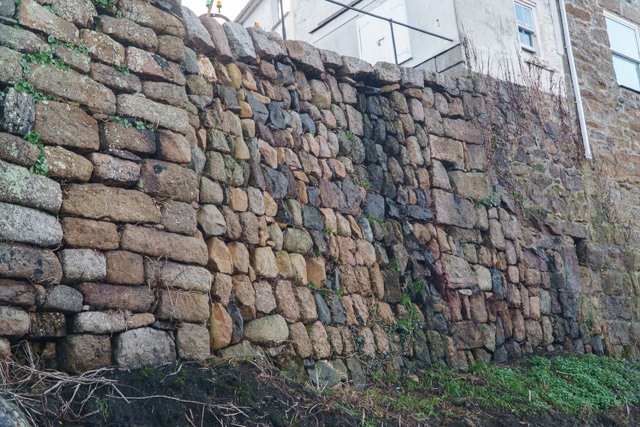
A closer look at the access road retaining wall has helped reveal evidence that the road was widened in the past. The way the stones are laid bears no resemblance to the quality of stonemasonry evident elsewhere. At some time in the past, and prior to any photographic evidence, it is thought that the road was widened to provide safer access as horse-drawn traffic increased owing to a growing fishing fleet using the old quay.
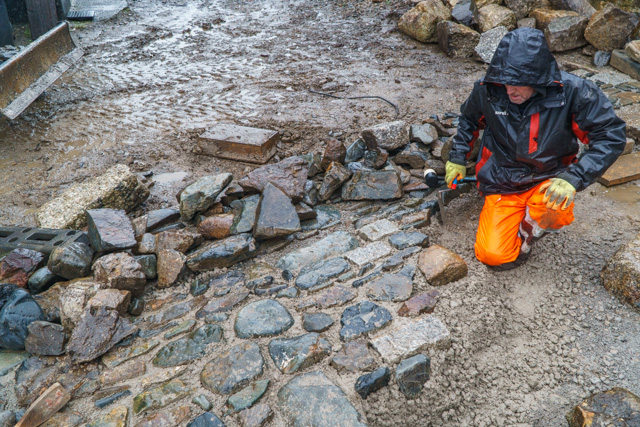
A little bit of rain doesn’t stop Terry from Symons Construction to continue laying in the recycled blue elvan and other granite stone setts which will allow for the original stonework to be revealed…
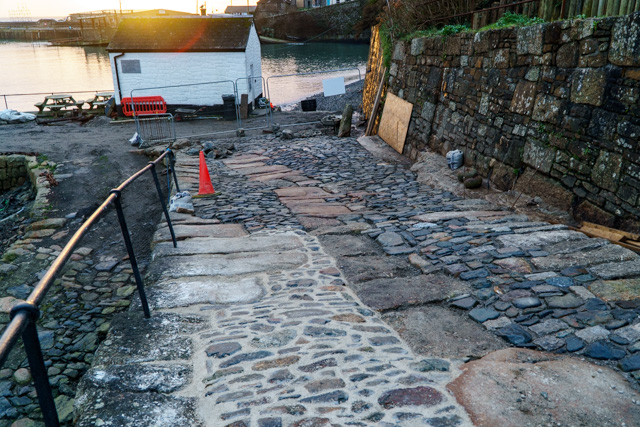
a break in the rain allowed the top section to be lime mortar pointed…
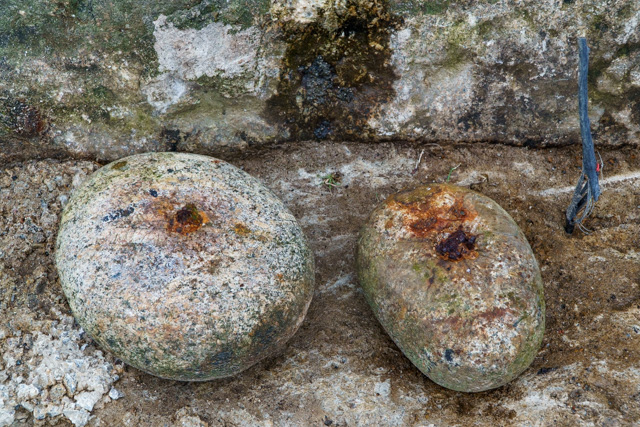
more bal stones have come to light…
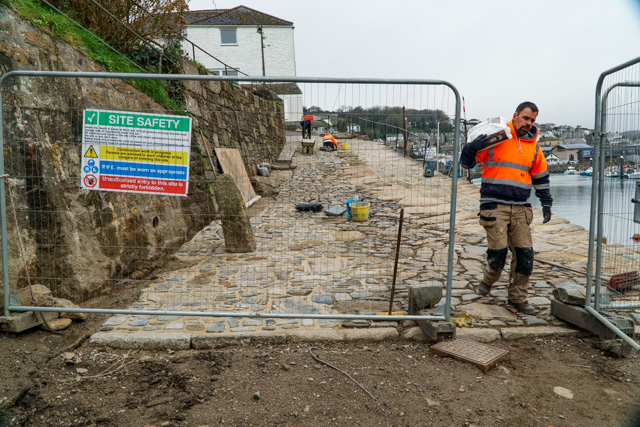
James heads down the newly laid road surface with another bag of lime…
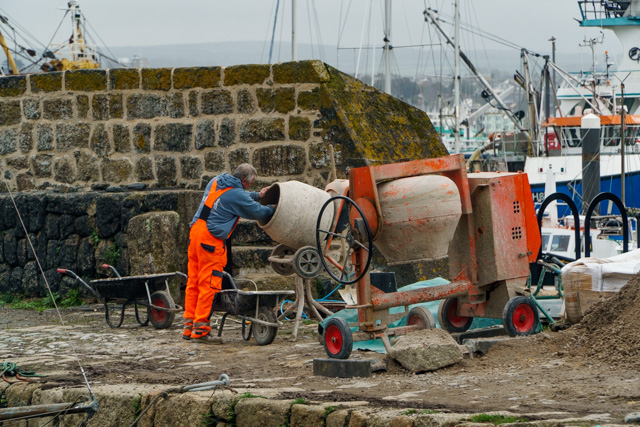
to feed the mixer…
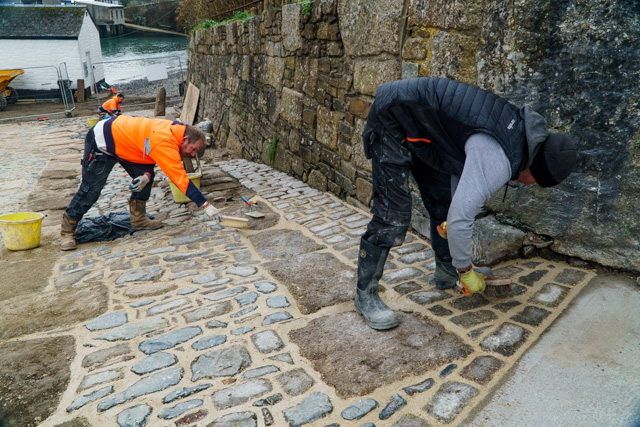
then it’s back to completing the lime mortar pointing…
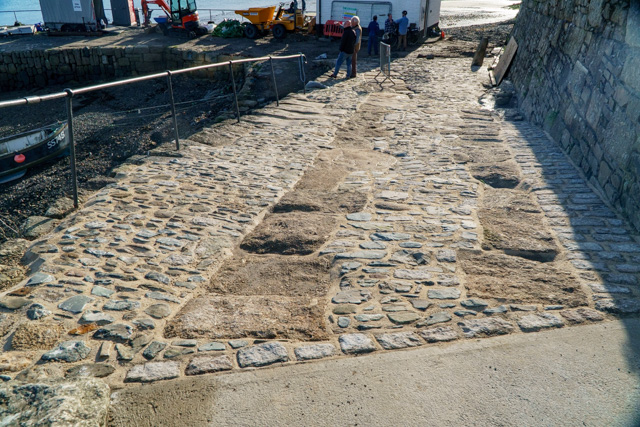
which now clearly reveals the line of the original edge of the access road which Historic England were very keen to see preserved as a visual reminder of how the harbour has responded to different needs of use over time…
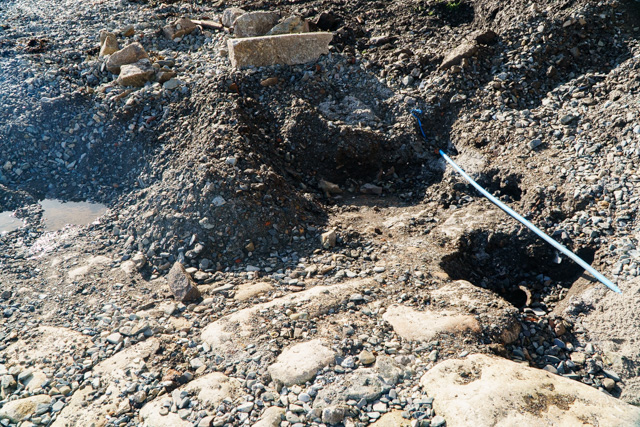
The swing shovel used on site has revealed the extent of the south slip, much of it long since covered by a beach of pebbles and rubble…
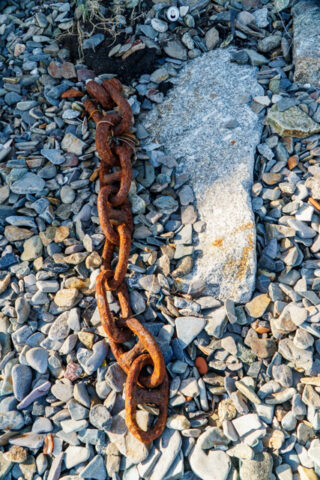
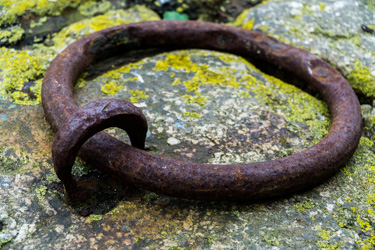
amongst the pebbles on the beach are five huge single granite stones, each weighing several tones and fitted with iron eye embedded in lead which were used as mooring stones, exactly where remains unknown but possibly they were used to hold the old coal hulk in place in the early part of the 20th century.
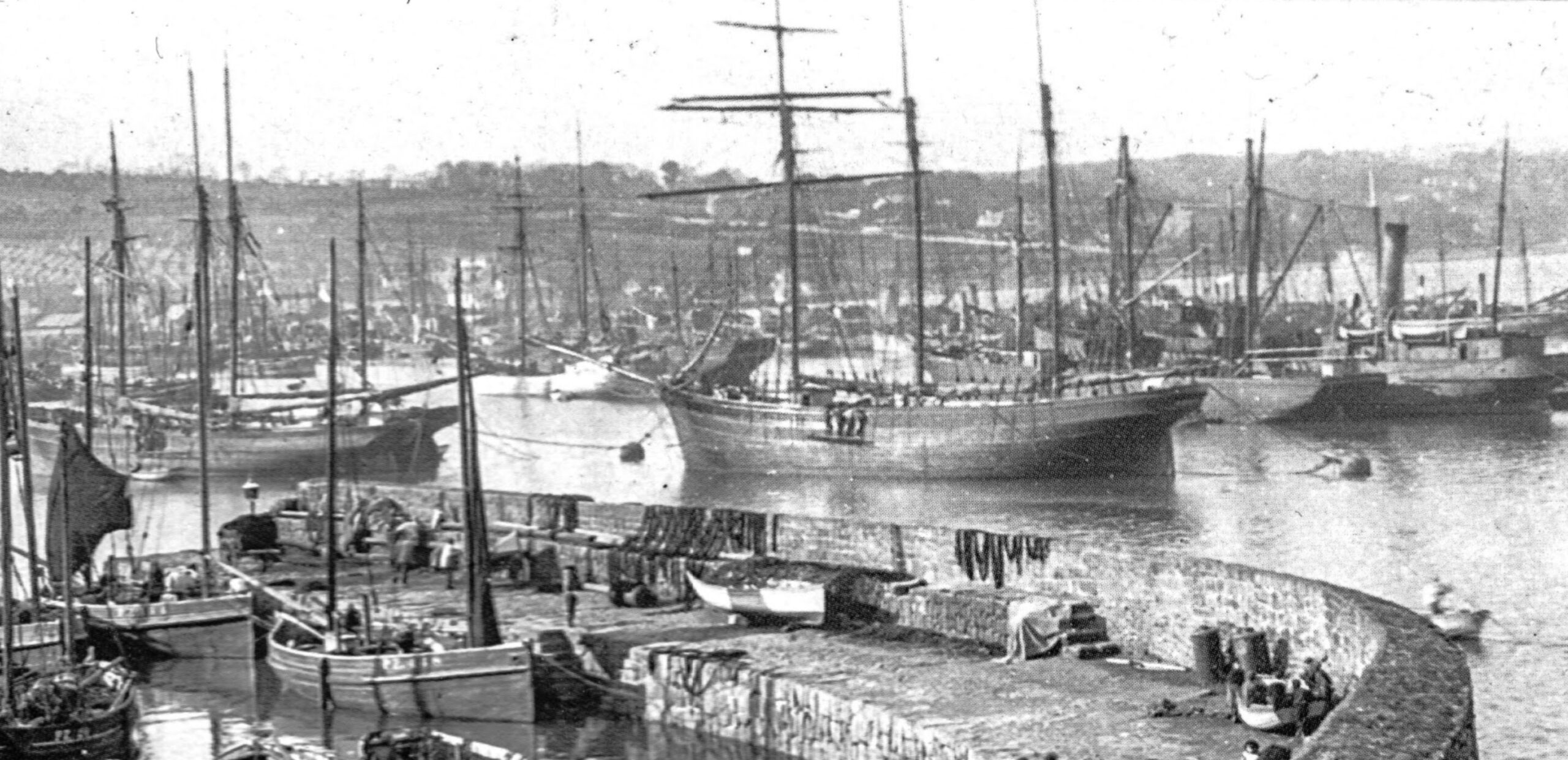
In this photo a large sailing ship is moored between two large steel buoys – there’s a good chance the large granite stones were used to anchor the buoys in place. In 1979 when the Mary Williams pier was built, a swing shovel, working from a floating barge, was used to dredge the harbour. In the process these granite ‘anchors’ were lifted from the seabed and dropped on the beach under the Fishermen’s Arms.
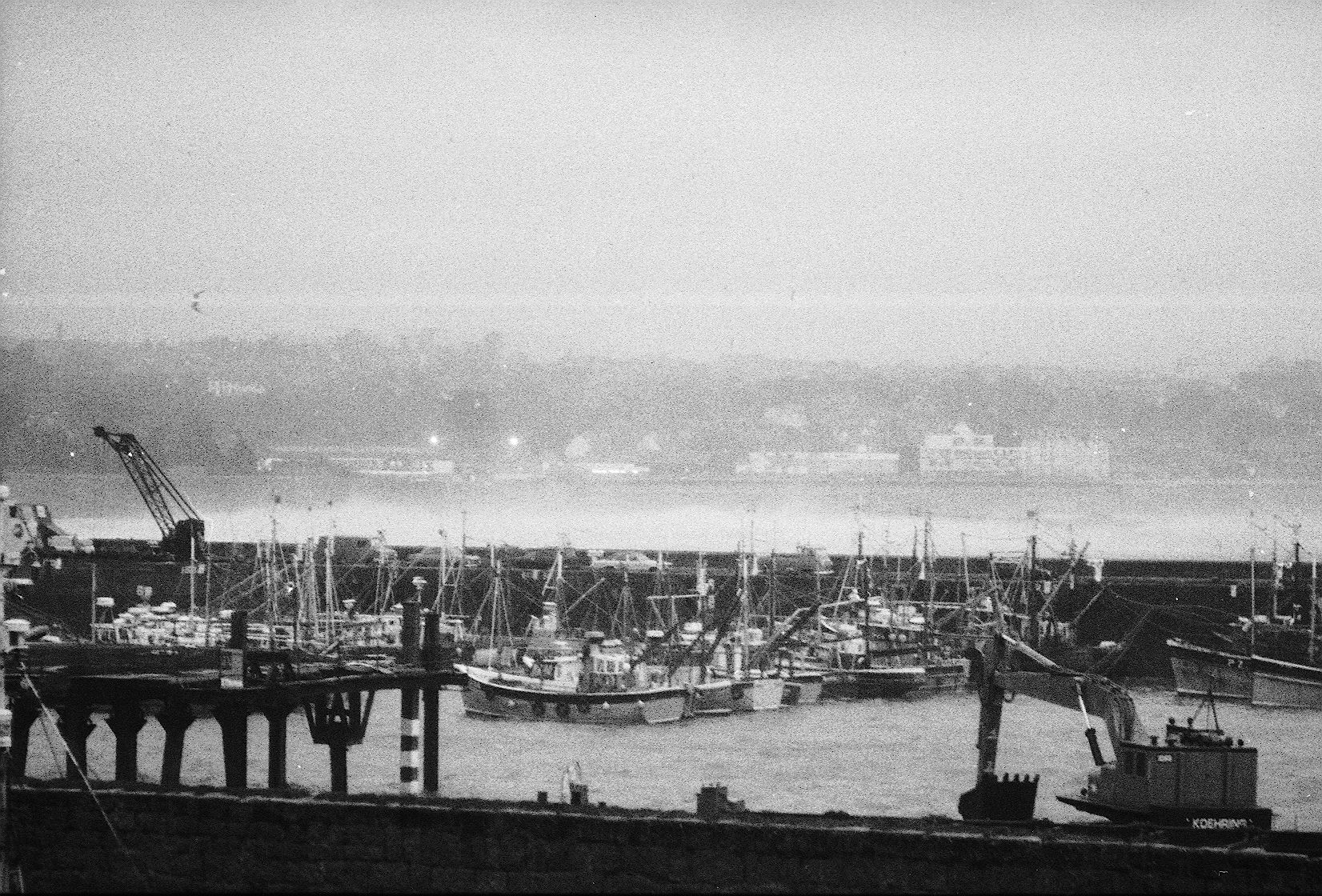
To the left of this photo the new Mary Williams pier can be seen in the process of being lengthened, to the right is the floating barge and swing shovel used to dredge the harbour.